On the 11th December 1918 the Russian author Aleksandr Solzhenitsyn was born. His work was widely disseminated and celebrated in the free western countries but he endured censorship and oppression as a Soviet citizen. The Russian revolution was believed by the vanguard to forge total equality on Earth, but this could only be achieved through a series of ideological and physical purges.
There is a bitter irony that lies behind all idealistic thinking, in that for all of the hyperbole about creating this mythical “one world of harmony”, it strips all of the human characteristics that give our lives meaning. Karl Marx once sneered that “religion is the opium of the people” but lacked the foresight to perceive that his own reductive and crude philosophy ultimately had the same effect upon the people who were forced to believe in it.
Solzhenitsyn was more than a Russian writer, he was almost a prophet. He enjoyed the intellectual and personal freedoms of the west as an exile, but like all refugees he longed to return to the country of his birth. He understood that the west was on a path towards progress, but he feared that this relentless pursuit for societal perfection could lead to moral degeneracy.
He outlined all of this in a 1983 speech entitled “Men have forgotten God”. He foresaw that a society solely motivated by personal gains and pleasures becomes spiritually hollow and decadent. The irony is that the west used to laud itself for being morally superior to the east, but now the opposite seems to be happening.
After the Soviet Union collapsed, a spiritual vacuum imbued the populace. The effects of this were starkest in Russia, a unique nation which had lost its entire cultural identity in the wake of the revolutions. The effects are still being felt today, it has led to the rise of populists who are struggling to form cohesion in a fractured and traumatised society.
(Photograph is of Russian mystic and philosopher Aleksandr Dugin).
Vladimir Putin`s vain and almost futile campaign to reclaim Russian imperialism is a consequence of the perceived failures of democracy in the country. He is derided in the west but it is obvious that most of his western critics are shallow hypocrites. It seems really perverse to observe how the world looks now in the 21st century, with the west appropriating the worst elements of Marxist belief and forgetting that there were positive elements to societies before mass industrialisation and scientific progress.
“Culture War” has now become a hackneyed phrase which is almost devoid of its actual meaning. It is used in a flippant and trivial way without any real or thoughtful consideration of its origins, which date back to religious persecution in nineteenth century Germany.
(Picture is of Cologne Cathedral).
In Biblical times Jacob wrestled with the Angel and this became a pattern of struggle throughout history. There has always been a very real conflict between defending personal conviction or belief against the oppression and dominance of majority opinion.
In 1873 the German Government perceived a growing threat from the Catholic Church and they grew sufficiently alarmed by their influence to introduce legislation. These became known as the “Falk Laws”. These laws limited Catholic participation in areas like education. However many priests faced persecution for simply providing religious education in private homes and anyone who assisted them faced fines, arrests and imprisonment. In 1874 the Bishop of Trier Matthias Eberhard died after serving nine months in prison. Other clergy lost their livelihoods entirely.
In the face of oppression and persecution many German Catholics sought asylum. In 1875 an emigrant ship bound for New York left from the port of Bremen. The voyage was intended to include Southampton but disaster unfolded when the ship struck a sandbank on the Thames Estuary. All of the 57 passengers who died were German Catholics and this included 5 nuns.
It is time that we acknowledged the courage of the real fighters in the culture war and put aside the petty squabbling that is erroneously attributed to a supposed culture war which hasn`t actually lead to persecution and death.
On the 29th November 1898 C.S Lewis was born. Lewis was so much more than a writer of children’s fables, he was an academic and a philosopher who wrote extensively about theology and the challenges of faith in the modern world. His most prodigious period of work was published in the sixties, a decade associated with an almost militant secularism. However his warnings about western societies divesting themselves of their religious and artistic traditions are remarkably prescient.
The cultural vandalism enacted by the sixties radicals has devastated society. Life in the west today literally has no meaning, as the beliefs that once anchored us have been deliberately destroyed. Lewis` prophecy that the forces of individualism, materialism and mechanisation would have a malign and irreversible effect on future generations has been proven correct. In the age of the Internet there is no appreciation or understanding of the sublime, or of beauty in general because no-one has been taught there is value in such things, only pure rationality and function matters.
Consequently there is a distinct lack of humanity in modern discourse. Humanity, in its essence, is flawed, modern commentators insist that our dealings with each other should be dominated by reason but conveniently ignore the fact that we are not wholly reasoned. Human beings are also sentimental creatures, that is a fundamental part of our nature and we cannot change that fact. Political ideologies like socialism attempt to deny or subvert natural law but they always fail because they have an unrealistic expectation of human perfection. It is also false to claim that there is a dichotomy between science and religion because both are theories that have been subject to evolving debate for centuries.
It is more accurate to claim that there is a dichotomy between objective theories of the material world and the subjective experience of the individual. Science and secularism are perceived to be objective and reflect a universal reality, this has come into conflict with art and religion, specifically Christianity.
The artist believes that there is a more profound meaning to human existence beyond the base biological functions of breathing, eating and excreting and seeks to create beauty for its own sake. Similarly the religious believer, the Christian believes that individual life has an inherent value for its own sake, beyond the instrumental values of working or merely reproducing.
Christians do not deny that human beings can be selfish, lazy, greedy and prone to irrational violence because they have enough insight to realise that this is a unique folly of the species, what is important to them is to strive to be better. Unlike the secular or scientific believers, Christians maintain that good and evil are objective realities and are unchangeable and non negotiable. Murder, for example is an evil act, but modern secular people always seem to find excuses for murderers, pointing towards some material evidence that compelled that person`s behaviour.
It is obvious that attitudes like that have fragmented what is left of our civilization. The traditional values that used to cohere us as a community have withered away and life has just been reduced to our economic and material function. It is pitiful to consider how shallow modern existence appears, but at least we can comfort ourselves in the knowledge that our past had a greater merit.
On the 25th November, 1970 Yukio Mishima died in a ritual suicide. Mishima was a renowned Japanese writer and actor. He was also a right-wing activist who proposed that Japan should remain uniquely and unapologetically Japanese and resist any foreign influence, especially from America.
Subscribe to get access
Read more of this content when you subscribe today.
In the West, any death from suicide is regarded as shameful and cowardly, and a clear signal that the deceased individual was too weak to live. However traditional Japanese culture maintains that suicide is ultimately brave and heroic, and anyone prepared to die in that way should command the highest respect.
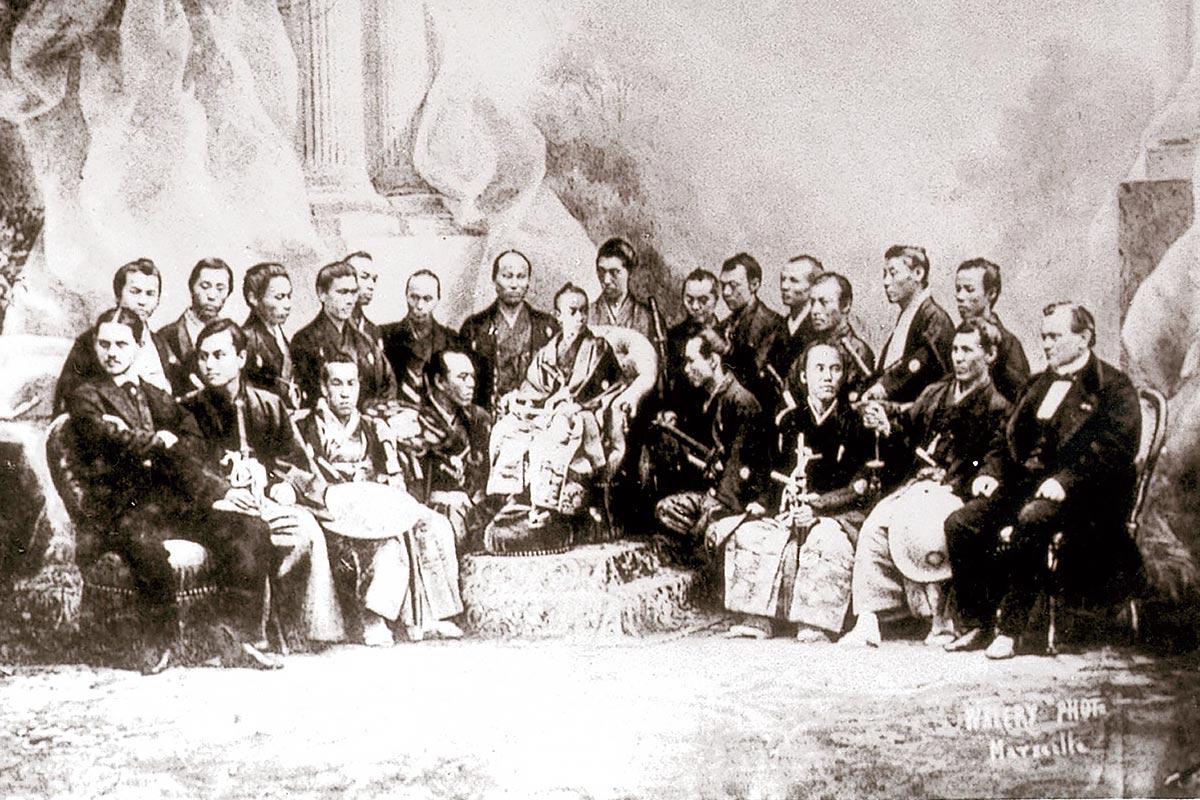
Mishima`s dramatic exit from this world was an imitation of a Samurai warrior`s last stand. The Samurai were knights in ancient feudal Japan who enjoyed the patronage of the Shogun, the military rulers. Although Japan was officially ruled by an Emperor, his role was largely symbolic, all the main diktats were issued by the Shogunate.
There were absolutist and autocratic codes for everyone in society which covered dress and conduct. This was the way of life for every Japanese citizen for centuries.
However in the nineteenth century western explorers attempted to impose modern systems, but they were met with resistance. The Portuguese were welcomed and briefly tolerated when they introduced new techniques in gun manufacture but their presence became intolerable when attempts were made to convert the Japanese to Christianity.
The resistance against this became increasingly violent, Christians were tortured by various means, some were forced into boiling hot springs, others were plunged into vats of excrement or crucified.
However this did not prevent any further European exploration, but they were not wanted, Dutch traders arrived in the intervening years but they were exiled on a barren island. Eventually the Shogunate issued an order that no overseas trade should take place and every Japanese citizen was to remain on home soil.
The regime was fearful that the precious identity of Japan would disappear, any foreign ship attempting to enter Japan would have to confront thousands of armed Samurai.
This uncompromising vision of Japan’s golden age, evinced through Mishima`s stark prose has attracted praise and revulsion in equal measures, even in the western world which has divested itself of its own proud traditions. Admiration for ancient Asian traditions is a consequence of European fragility.
This seemed apparent nearly a hundred years ago, when the right-wing Italian philosopher Julius Evola began his writing career. He argued that tradition was integral to humanity’s survival and quoted ancient Buddhist and Hindu texts to back his arguments. However, like Mishima, his literary reputation has been overshadowed by his brief involvement with far-right politics.
It is now fashionable to decry writers who are deemed beyond the pale, only by virtue of holding supposedly unpalatable views in a more modern and enlightened age. Such thinking detracts from the power of literature to provoke and question.
On the 17th November 1558 Queen Elizabeth I ascended the throne. Her ascension heralded a renewed English Protestant culture, which had been deliberately and maliciously suppressed and persecuted by her predecessor, Queen Mary. The Elizabethan age was revered and renowned as a time of stability and calm. This was a consequence of her 44 year reign and the religious homogeneity of the country’s population.
The literature of the Elizabethan era was distinct, it was inspired by the personality and character of Elizabeth herself. She was regarded as implacable and even mysterious. Her dogged refusal to marry her most ardent suitors lended her this air of mystery and she became known as the “Virgin Queen”.
The poet Edmund Spenser was inspired to write “The Faerie Queene” as a tribute to her. He reimagined her as “Gloriana”, a mythical figure embodying Protestant virtues. However after Elizabeth’s death the country lost confidence in itself and became unsure of its identity and purpose in a rapidly fractious and changing world.
Sir Walter Scott was sufficiently in awe of the unmistakable power of Elizabeth as Queen, so much so that he wrote an homage to her in the form of a novel “Kenilworth”. This was a courtly drama reimagined for the Regency age. The book is an example of a very British nostalgia for the rule of Gloriana. One passage reads,
“This aching of the heart, this languishing after a shadow which has lost all the gaiety of its colouring, this dwelling on the remembrance of a dream from which we have been roughly awakened”.
The subsequent reign of Stuart Kings could not compete with the grandeur left by Elizabeth. Her legacy was profound and enduring. The most notorious of the Stuarts, King Charles I could be seen as vain and indulgent, and a traitor. His Catholic sympathies garnered praise and revulsion in equal measures and led to the English Civil War.
(Photograph is of a salt cellar, allegedly made from a vertebrae of King Charles I)
KIng Charles I was arrogant to assume divine power, and his hubris ultimately led to his execution. It is clear that the last Tudor Queen has a greater hold over our imaginations than any other Monarch in our long history.
(Photograph depicts young Russian protestors from the Eurasian Youth Union, taken in 2006).
This Saturday the people of Lewes, East Sussex converge for their annual bonfire party. The Lewes celebration is the biggest and most extravagant bonfire night in the country. It commemorates the foiled Guy Fawkes plot and honours the memory of the Lewes martyrs, seventeen Protestants who were tortured and killed for their beliefs during the reign of Queen Mary.
The Lewes festivities are part of a local tradition, and attract both fame and infamy nationally. The costumes and displays are deliberately designed to be provocative, lampooning the excesses of the historical popes and other pious leaders. Clearly those who spoke out at the time knew that the most devious used their religious authority to cloak their own immorality. They were prepared to die defending their convictions.
It is obvious that the intention behind this is to mock and pillory figures of power rather than the devout believers. Every year a notorious establishment figure is made into a “Guy” to be burned on the bonfire. Historical religious persecution is casually dismissed as a distant era of primitivism and superstition, but the modern age has not moved on in terms of accepting others who profess a different opinion to the prevailing conventions or sensitivities.
The fate that afflicted those individuals who questioned the authority of the Catholic Church was gruesome, but the modern punishment of cancellation is much more insidious on a psychological level, and even more damaging than the physical tortures of sixteenth century inquisitors.
Until very recently every school child in Britain was implored to recite the rhyme to “Remember remember the 5th of November, Gunpowder, Treason and Plot”. This is not an attack on religious difference, but a reminder that a fanatical terrorist almost succeeded in destroying freedom and democracy in this country and this included freedom of conscience and freedom of speech.
It is vital to point out that if the Gunpowder Plot had succeeded, then the United Kingdom would have become a theocracy and every citizen would be controlled through a combination of intimidation and violence to adhere to the state religion. No-one would be free to question, or to highlight any double standard or hypocrisy, these are things that we now take for granted.
Unfortunately a new kind of heresy is being suggested, and it is promulgated from a powerful and influential class of people. Most people are not allied to this extreme cause but are too afraid to voice dissent, lest they lose their jobs or their friends. They are also subject to mockery, sarcasm and vulgarity rather than reasoned discussion. This is a modern kind of inquisition and it should be recognised as another form of torture. No-one should be subject to this kind of barbarism in 2022.
(Drawing by Fifa Finnsdottir, from “The Trolls in the Knolls”, a collection of Icelandic folklore).
On October 27th 1955, the Icelandic author Halldor Laxness was awarded the Nobel Prize for Literature. Laxness’ work helped to draw the world’s attention to this most mysterious and nebulous country. Iceland was founded in the ninth century by Viking chieftains from Norway and Denmark, who then took slaves from Ireland to build a civilisation. Most Icelandic people are the descendants of Irish slaves, and the Icelandic language is closer to ancient Gaelic than either Norwegian or Danish.
Laxness was acutely aware of Iceland`s long struggle for self determination and was a committed Icelandic nationalist. Until 1944 it remained under Danish control, in spite of its unique culture and language. However the path for nationhood was protracted and painful. Iceland was in an uneasy alliance with Denmark throughout the twentieth century, particularly during the Second World War and in its aftermath.
Iceland, like Denmark, was neutral at the outbreak of war. Germany invaded Denmark on the 9th April 1940, and the Danish powers declared that Iceland would control its own defence and foreign policies. However just a month later British forces launched an invasion on Icelandic soil, fearing that the Germans would make an incursion on the island. The Icelandic authorities were incensed at this violation of its neutrality. A year later American forces took over the defence of the island and did not leave until 1946. Three years later Iceland joined NATO but this was not popular with the civilian population and riots broke out.
This fractious period of political and social instability is the backdrop of Laxness` most famous work, “The Atom Station”. The narrator is Ugla, a young woman from the countryside sent to work for a prominent Icelandic politician in the capital city Reykjavik. She is at turns sardonic but at other times also acutely vulnerable. Her naivety is cruelly exploited both by the elite authorities and the left wing activists who populate the city`s cafes and bars at night.
Ugla is an unashamed romantic who clings to the mythology of Iceland’s ancient past. Her love of tradition clashes with the harsh realities of modernity, including the aforementioned “Atom Station”, an American funded defence post and also a glaring symbol of militarism, colonisation and globalisation. Ugla falls in love and becomes pregnant, but this does not spell disaster for her, it allows her to find hope and renewal, and a return to the land of her ancestors.
Laxness is a pertinent writer to return to at this present time, a time when progressivism is being challenged in the most horrific and vivid ways. More people are questioning whether modernisation, westernisation and globalisation are positive forces for good. Traditionalism, conservatism and nationalism are now being mooted as alternatives, despite their historically negative connotations. There is virtue in the past which remains unacknowledged.
On the 18th October 1910 the English author E.M Forster published “Howard`s End”. Ostensibly it is a novel about the preoccupations of two middle class families living in late Victorian England. However the philosophical themes that underpin the novel are much more profound than the surface narrative suggests. This book is much more than a peculiar curiosity from a distant era. In spite of its unfamiliar historical setting and unsympathetic characters, Forster`s prose allows us to relate to the people and their surroundings on a purely human level.
Subscribe to get access
Read more of this content when you subscribe today.
This tale has a greater resonance and meaning which is more pertinent to our contemporary existence and especially in the light of some very recent political events. “Howard`s End” is a melancholic reflection on the snobbery, xenophobia, materialism and the decline of the spiritual tradition in a modern, industrialised England. The central protagonists are an Anglo-German family called the Schlegels. Although they are wealthy and cultured, their German heritage becomes a constant barrier in society.
However the Schlegels are the classic example of insider-outsiders, their foreign origin allows them to develop a greater appreciation of the culture that they have absorbed. Unlike the “native” English, they are loath to criticise the history and culture and almost over compensate in their behaviours to prove that they belong.
Unfortunately German history is not well known in this country. It is perhaps a consequence of geographical distance, as an island nation we were insulated from the revolutions that burned through central Europe in 1848. At that time Germany was not a unitary nation but a collection of principalities ruled by dynastic families.
It was only during the time of Bismarck’s ascension that a purposeful aim for national unity was declared, alongside a greater ambition to extend the German Empire. In 1862 he delivered his “blood and iron” speech which helped crystallise the German stereotype in the English imagination. Even though Germany was the nation of Handel and Schiller, this caricature of the dictator- imperialist remained. Forster opines,
“England was alive, throbbing through all her estuaries…what did it mean? Does she belong to those who have moulded her and made her feared by other lands, or to those who have added nothing to her power, seen the whole island at once, lying as a jewel in a silver sea, sailing as a ship of souls, with all the brave worlds fleet accompanying her towards eternity?”
Forster also gives the reader a rare and privileged insight into the Schlegel siblings memories about their late father,
“If one classed him at all it would be the countryman of Hegel and Kant, as the idealist, inclined to be dreamy, whose imperialism was the imperialism of the air.”
Forster is keen to impress that the Schlegels are romantic sentimentalists who pine for the mountains of their ancestors. However as they are the inheritors of wealth they are isolated from the rest of society and it is this rare luxury that allows them to indulge in intellectual and artistic pursuits.
However the grubby business of money intrudes in the most disturbing and unsettling way with a near simultaneous encounter with the Wilcox family, and Leonard Bast. The Wilcox family amassed an immense fortune and property portfolio including the estate of “Howard`s End”. However they are also brutal materialists and philistines. Leonard Bast is a humble bank clerk but filled with artistic and intellectual aspiration, he longs to find his soul.
When these characters collide a cascade of misery unfolds, adultery, illegitimacy, death and prison. The only real element that is significant in its absence is love, the most simple form of human connection that eludes the entire cast.
Forster infers that this noticeable decay of feeling is the natural result of the loss of English spirituality, he despairs in the closing scenes,
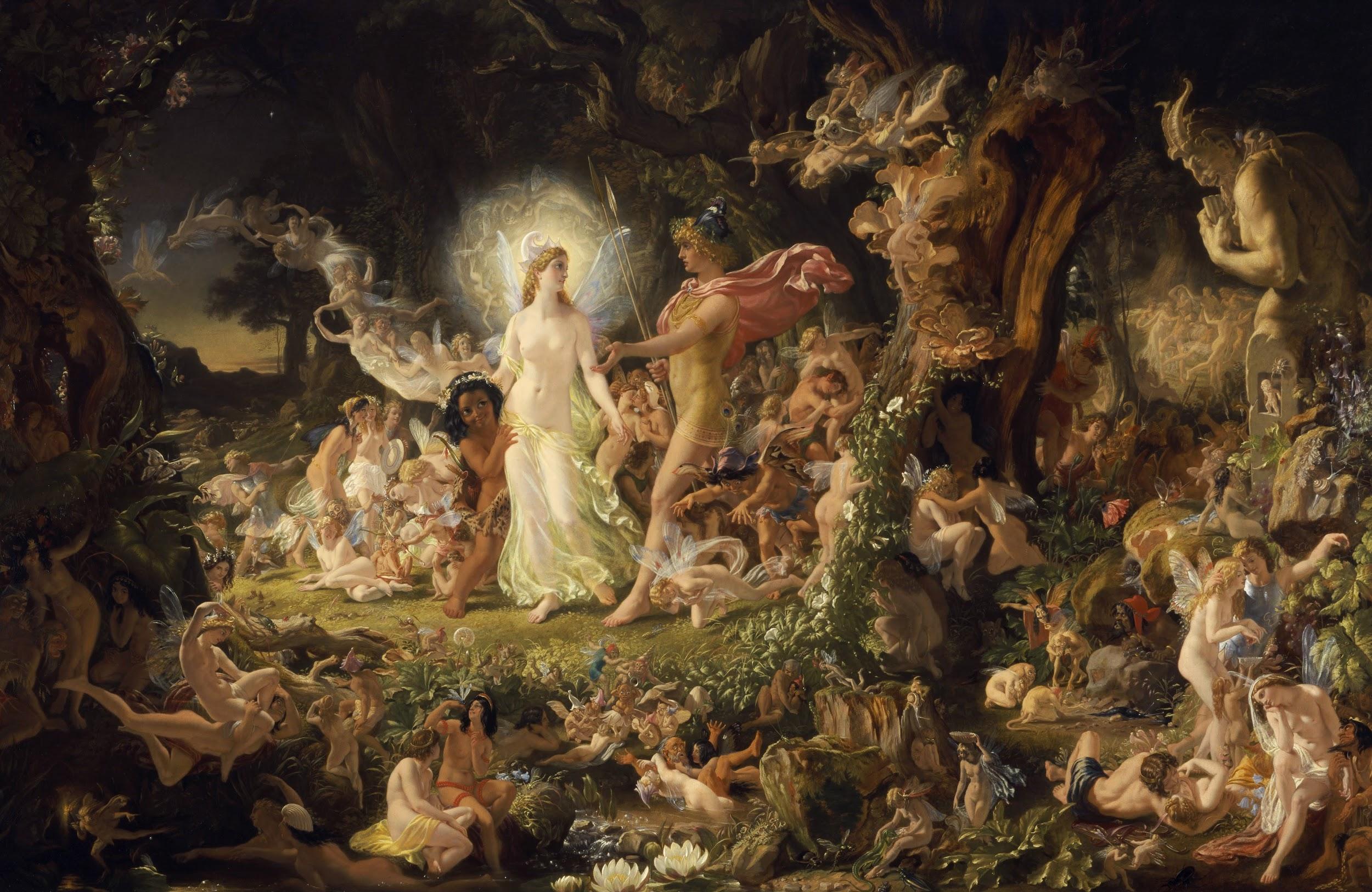
“Why has not England a great mythology? … Deep and true as the native imagination can be, it seems to have failed here. It has stopped with the witches and fairies.”
An Edwardian novelist`s plea for connection may not be the most obvious allusion to draw in terms of the Brexit vote. However the shrill arguments that emanated from the Remainer side was a timely reminder that dull, shallow and literal people will never understand the moral, spiritual and emotional reasons behind the referendum.
The referendum itself was devised by insider-outsiders within the political world, all galvanised by a profound affection for the culture and history of this country. The first meeting was held at the Tate Britain gallery, the apex of British visual art, and a space where journalists, politicians and associated bureaucrats were conspicuous by their absence.
Three of the instigators were notable insider-outsiders, overcompensating as a consequence for their perceived lack of influence and connection to this country. Daniel Hannan was born in Peru and had first hand experience of communist dictatorship. Douglas Carswell spent most of his early life in Uganda as the son of a medical missionary. Boris Johnson was born in America to a colourful mixed heritage family with roots in Turkey and Belgium. They were all united behind a campaign to restore national sovereignty.
Clearly the base motives of an organisation that evolved from a Franco-German Iron and Steel agreement were of little benefit to the ordinary people of this country. It is naive to adhere to the notion of internationalism. It is a belief only shared by utilitarians and those who have never genuinely experienced how it feels to be on the margins of society, but who desperately want to belong to it.
(Picture-the ruins of the church of St Andrew, Covehithe, Suffolk).
The English people have always wrestled with their spiritual conscience and this has affected their outlook on life, for good and ill. It has also imbued the culture of the country in an indelible way. The ambiguous religious identity of England has been the chief source of strife and this has in turn led to misunderstanding and even malice.
However this struggle has formed the unique character of the Englishman, an often diffident and awkward person uncomfortable with either overt sentimentality or moral earnestness. The English are distinct, their religious traditions are vastly different from the vivid Catholic culture of Ireland or Spain, and the austere expressions of Protestantism in Scotland or Holland.
The religious wars that were inflicted upon the European people were solely based upon perceptions of power. It was basically an enormous power struggle between the higher supremacy of the Church versus the weaker status placed in government. The English Civil War was just another manifestation of a battle between two omnipotent and recalcitrant forces who believed that they had the spiritual authority over the nation.
When we look at this major historical event with our modern sensibilities we are horrified by the violent bigotry expressed from both sides, but seventeenth century England was in effect a different country inhabited by superstitious and primitive people. However we must not underestimate the impact of this War, it remains a conflict that is deeply embedded within our national psyche.
Many counties in England were scarred by the War, families were divided and massive losses of life ensued. In spite of the fact that England is a largely secular nation, the superstitions of our ancestors still rise to the surface in barely perceptible ways, often the Puritan sensibility emerges but at other times our affection for our older Catholic past becomes much more obvious.
The Victorians inherited a country that suffered the violent iconoclasm of Cromwell’s troops but had also enjoyed the artistic and cultural regeneration of the Restoration years. The nation was nominally “Protestant” but the Church itself was unsure of its role and identity in a society that was growing materially richer but spiritually poorer. Many prominent individuals were allied strongly with the moral certainty of the Roman Catholic Church and risked opprobrium for expressing the dogma that so many people believed caused societal oppression.
Sir Edward Elgar was one of the most influential English composers of this age, and also a devout Roman Catholic. He attracted controversy for adapting Cardinal Newman`s evocative and affecting poem “The Dream of Gerontius” to music. Ostensibly a prayer for God’s mercy from a dying man, it was widely interpreted as almost a propaganda piece for the Catholic Church and its unyielding dictum on mortality.
The Church of England had dispensed with many Catholic rituals, including the clergy’s role in administering “extreme unction” for the dying. Protestants believe that only God has the authority to forgive the sins of believers once they pass away, but Catholics place their ultimate loyalty to the Priest in the hours of death and must confess solely to him in order to secure their place in heaven.
The notion of ex cathedra is alien to most people brought up within the Protestant tradition and it is a confusing concept to grapple with, it seems pious and cold. However Newman and Elgar evoked the sublime beauty of the devout and re-established that historical link between the English and the Catholic Church. The great Puritan poet John Milton opined that “neither man nor angel can discern hypocrisy, the only evil that walks invisible except to God alone” but in the minds of Catholics their lives and deaths are entwined with an eternal set of laws that have remained unchanged since St Peter. These are the legacies that we continue to ponder.
On the 22nd September 1692, the last executions for witchcraft were enacted in the USA. These terrifying punishments were a consequence of the hysteria and paranoia that had gripped the populace for that entire year. The population had experienced misfortune on an unprecedented scale and they needed to find scapegoats.
These were frontier people who sought religious and economic freedom after suffering prejudice and penury in Europe. They were deeply pious but prone to their own prejudices, particularly directed against women and especially women with intelligence and independent spirits of their own.
Throughout history women have been the focus of awe. Men feared the power of female sexuality as well as enjoying the allure of it. This is the root of the myth that a mighty woman has the feat for destruction. Eve had the wiles to convince Adam to eat the Forbidden Fruit. If Eve had not convinced Adam then human beings would not have acquired the knowledge to develop and we would have lived like the animals. However Eve also made man self-conscious and ashamed of his own physical desires.
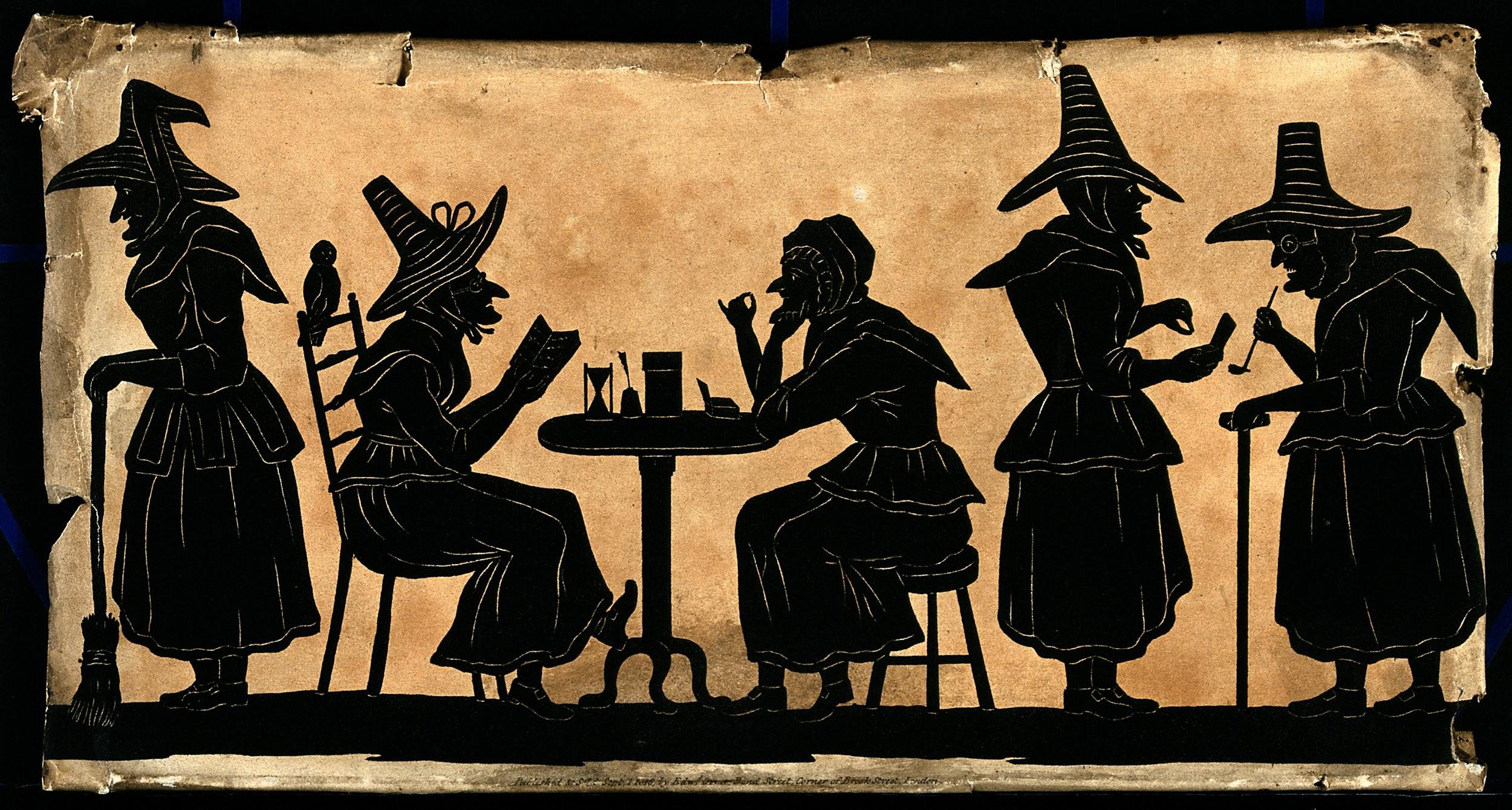
In classical myth the most alluring figures are female, they have the power to inspire poets but also the potential to confuse, to blind and to maim. Mediaeval Europe had absorbed the Biblical and classical perception of women. This led to the first recorded examples of literal “witch hunts”, where women could face arrest for practising sorcery or witchcraft. A proportion of these women were not sorcerers or witches but simply clever and capable, often with highly sought after skills in medicine.
The greatest male writers of the twentieth century channelled their awe, fear and desire for female sexual energy and intelligence into their work. D.H Lawrence built his entire literary career upon fierce and inspiring women, a mirror of his own life as a young man surrounded by strong women. Philip Larkin and Ted Hughes, though entirely different in terms of poetic style, were driven by the energy of the women in their lives.
It is vital that when we consider the “witch” as an aspect of feminine sexuality we should remember that it is a powerful symbol in our culture and history.