Vines and Thorns

The 31st of August is the feast day of St. Aidan, a pivotal figure in the English Church. Aidan is credited with re-evangelising the native population, during a time of major political and social instability, marked by the collapse of Roman rule and the successive invasions of heathen tribes from the continent.

It was a weakened and demoralised nation. As a consequence it was much easier to invade and conquer a nation that had little defence. When the Romans departed there was a power vacuum. Germanic speaking warlords knew that they could cement their rule in an enfeebled land.

The Angles, Saxons and Jutes sought to establish new kingdoms for themselves, but unlike other European tribes who appropriated Christianity, these invaders were resolutely Pagan. They felt nothing but disdain for the gentle piety of the native people. They were fierce marauders who terrorised the indigenous Celts into submission. They sought total dominion over the island.

In less enlightened times, such misfortune was interpreted as divine retribution for a population who had clearly failed in their Godly devotions. This island was once renowned for its devout and learned characters, like Patrick and Pelagius, but the fruit of their endeavours was starting to wither on the vine. According to the theologians of the period, we were an indolent and stubborn nation, and the barbaric invaders were just punishment for such grave sins.

The Anglo-Saxons founded seven petty kingdoms called the Heptarchy. These were in a constant state of conflict for power and influence. The patience of a subdued and apathetic nation was tested to its limits in these years. War only begets more war, and avenging the victors for the humiliation of vanquishment is destined to end in disappointment and death. The Pagan creeds professed by the Kings were starting to pall, and the peaceful philosophy exemplified by the humble Christian monks gradually became more palatable than the alternative.

One notable convert was the Northumbrian King, Oswald. Oswald made a vow that he would restore Christianity to his people. He appealed to a young Irish monk called Aidan to bring the Christian message back to a community that had lost its way. Aidan’s method was simple, he brought the people back to Christ through conversation. He traversed Oswald’s kingdom converting, or reverting his subjects through reasoned discussion. The path to enlightenment was no longer strewn with thorns. It is sad to reflect that we have forgotten the quiet fortitude of Aidan, and we are almost descending into violent barbarism once again.

From the Severn to the Somme

On the 28th August, 1890 the poet and composer Ivor Gurney was born. He was the middle child of a Gloucester tailor, and from a remarkably young age had precocious talents in literature and music. His first serious attempts to write poetry and music began in his early teens. He was encouraged by a childhood mentor to pursue his ambitions and was awarded a scholarship to the Royal College of Music in 1911.

The College had nurtured the talents of English luminaries like Ralph Vaughan Williams, and his later compositions echoed the plaintive and sublime tones reminiscent of this great composer. However his studies were truncated, first by a nervous breakdown in 1913, and then by the outbreak of World War One a year later.

He enlisted as a private in the Gloucestershire Regiment and was sent to the front. Amidst the almost unimaginable horror of war, he focused his mind on writing poetry. In April 1917, he was wounded in the shoulder and while recuperating in hospital completed his first book of poetry “Severn and Somme”. He also composed two songs, “In Flanders” and “By a Bierside”. He recovered and was sent back to the frontline, but was gassed and hospitalised once more.

This experience altered him, the melancholy that afflicted him as a student returned and deepened. He fell in love with the nurse who saved his life, but the relationship could not survive. His mental health deteriorated and he was medically discharged from the Army. His attempts to rehabilitate himself back into the Gloucester community were dismal failures.

However he continued to pursue his creative ambitions in spite of his periodic spells of mental ill health. Vaughan Williams himself acknowledged his potential and helped him with his medical bills. He was a frequent visitor to the hospital and worked with Gurney on his musical compositions. He also persevered with his poetry. Ultimately, though, he could not recover from the severe mental illness that plagued him since he was a young man, and he spent the last 15 years of his life in psychiatric hospitals. He died from tuberculosis in 1937. He was just 47 years old.

It is shameful that his work was neglected during his lifetime, as he was overshadowed by other World War One creatives like George Butterworth. It is also tragic to reflect on the immense stigma that has been attached to his legacy due to the fact that he suffered from mental illness.

Only now, in a more enlightened age we are realising the artistic talents of Gurney. More of his work is being discovered, published and performed. In 1982, Gurney’s previously unpublished poetry was released to the world in a volume entitled “Collected Poems”.

The last poem in the collection “The Wind” is a haunting evocation of war and death. The third stanza ominously proclaims,

“At dawn a thin rain wept.

Worn out, I slept

And woke to a fair morning

My days were amply long, and I content

In their accomplishment-

Lost the wind’s warning”.

In 2010, his “Gloucestershire Rhapsody” was performed for the first time. It is a moving tribute to the county of his youth, and resonates as much as other pastoral pieces by the likes of Holst, Vaughan Williams and Elgar. We must never forget these great poets and musicians, especially in these troubled times when we need art to give us solace.

Twisted Sisters

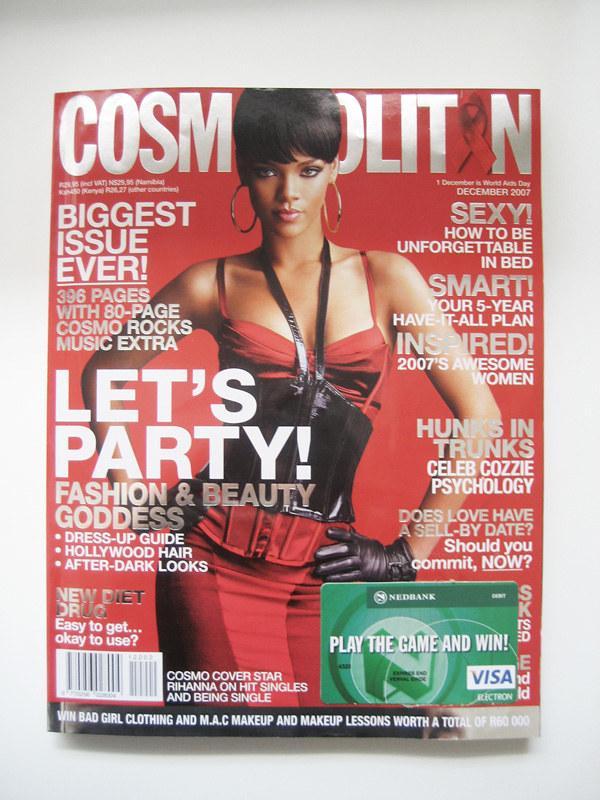
On August 13th, 2012 the American author and publishing magnate, Helen Gurley Brown died. She was a fierce proponent of women’s equality in the workplace, and by extension in the personal, specifically the sexual sphere. In 1962 she published “Sex and the Single Girl”, a book that advocated for total economic and sexual freedom for young women. Three years later she was appointed editor-in-chief for Cosmopolitan magazine.

Consequently, Gurley Brown was considered one of the main cheerleaders for the sixties sexual revolution. In her thirty year career as magazine editor she was responsible for commissioning writers who were willing to promote the idea of sexual liberation.

However this was where her career took a distinctly sinister turn, she had set rules for the articles. The writers were encouraged to exaggerate, or even fabricate stories in order to maintain the illusion that sexual relationships without responsibility truly made women “free”.

This was an especially lucrative form of propaganda, as financially independent women became a new market for the advertisers. Her tenure only served to make the publishing and advertising industries very rich, and for decades women were sold a lie.

This was aggressive, exploitative capitalism masquerading as feminism. It was, in fact, the epitome of anarchic capitalism, when profit becomes the sole motivation but at the expense of social responsibility. The most egregious lie of all was to promote abortion as a benign lifestyle choice. It was trivialised and sold as just another service, and adverts for abortion providers were placed rather cynically alongside other adverts.

No-one was willing to write about the reality endured by women who sacrificed the chance of family for a career, especially those who felt forced to suffer the trauma of abortion just to maintain their economic status. There is something essentially dehumanising about the philosophy that propped up Cosmopolitan magazine, it reduced women to their function and utility in the economy.

The inherent value of life was diminished in favour of the material. Even now, women who dare to speak out against this cold, dehumanising rhetoric are denounced as traitors to the sisterhood. The reverse is true, however. The women who deliberately propagated the lies for financial gain betrayed themselves and their sisters. We are still suffering the repercussions.

Beyond Borders

On the 1st August, 1960 the former French colony of Benin became an independent country. The relatively modern construct of Benin was built upon the foundations of an ancient kingdom known as Dahomey. Throughout the nineteenth century the Kingdom of Dahomey thrived on the Atlantic slave trade, and it was a highly organised militaristic state. Consequently, European colonisation proved to be extremely fruitful for the elites in Dahomey society, as slaves were traded in exchange for weapons and materials like gunpowder.

This lucrative industry was threatened by British attempts to abolish slavery in the region. In contrast, the French had forged a commercial alliance with the reigning Fon dynasty and continued to trade slaves. Hostilities broke out in the ports as Royal Navy vessels fought valiantly to thwart the slave ships from leaving.

However France was not the only European power that continued to benefit from this industry, the Portuguese also acquired vast wealth and influence over the Kingdom. They created the world’s largest slave colony in Brazil. The city of Ouidah was the centre of Portuguese power in Dahomey.

It was also the infamous setting for Bruce Chatwin’s illustrious and startling 1980 novella “The Viceroy of Ouidah”. Chatwin was a fearless writer who travelled the world seeking essential truths about humanity. He was fascinated by the natural world and how the elemental impacted upon the psyche of people. In his mind, the Earth itself had no physical borders, it was just a vast terrain ripe for discovery. He made the decision to become a nomad, and he was wedded to this status until the day he died. The world was a dangerous place, yet he was courageous enough to explore it.

In the winter of 1976 he visited Benin to conduct research for the book. Unfortunately the country was in the middle of a coup and in January 1977 the authorities arrested and detained him on suspicion that he was a mercenary. He was imprisoned for three days and then deported. He was not deterred by this experience, and pursued his project in Brazil.

The book, though short in dimensions, is a condensed narrative of the players in a long drama of military and political ambition. The turmoil that the world is experiencing now, essentially boils down to this sad but salient fact.

The Spirit That Plagued Us

On the 25th July, 1834 the English poet, philosopher, critic and theologian Samuel Taylor Coleridge died. He was just 61 years old and had battled for many years with an enduring addiction to opium. Coleridge was just one prominent cultural figure implicated in the most radical development in the long and fraught history of European civilisation.

As Europe wrestled with political and social upheaval, new ideas were being forged. The late Eighteenth century was a time of unprecedented change, scientific discoveries challenged prevailing religious sensitivities. This was a period where genius was cultivated. It was a heady environment where this new concept could flourish. The old Europe was dwindling, in this entirely new atmosphere where the shackles of convention had loosened, the genius could acquire the status of a God.

However these were purely secular deities who utilised the new theories of reason to break traditions as a means of revitalising society. Coleridge was swept up in the fervour of revolution, and was persuaded by another young radical poet, Robert Southey to recreate a new society in the wilds of Pennsylvania called the Pantisocracy. Both became disillusioned and abandoned their plans when they realised that their utopian dreams were pure fantasy. Coleridge was also struggling in an unhappy marriage.

In 1795, Coleridge met William Wordsworth, and their friendship and collaboration was soon to become a fruitful one. Wordsworth had witnessed in real time how destructive revolution could be, as he lived in France as it descended into terror and ultimately tyranny. Both Coleridge and Wordsworth had an almost uncanny insight, they understood that living in an entirely rational society detached from human sentiment is a cold and brutal experience.

Wordsworth and Coleridge were suspended between two different worlds, a dream state of a stable, bucolic past alternating with a waking nightmare vision of a future of chaos and the void. Their most famous collaboration “Lyrical Ballads” addresses the necessity of sentiment. There is a ponderous tone to the poems, a necessary counterpoint to the noisy tumult of revolution. It is a profoundly conservative work, allying itself to old traditions, old ideas and concepts.

Coleridge’s most famous poem is “The Rime of the Ancient Mariner”, a startling and disturbing piece that revolves around a tale of a hunted albatross. The theme is spiritual redemption and it is written in a traditional form. There is an ancient cadence to the poem, it evokes the wistful verse of old sailors lamenting their seafaring days. We still relate to the romanticism of poets like Coleridge, and his legacy still resonates.

The Twelfth

The Twelfth of July celebrates a pivotal moment in history, sealing the fate of the United Kingdom as a political and cultural entity. Recently, however the focus has centred solely upon its supposed sectarian nature. Critics of the event fundamentally misunderstand and misrepresent the meaning and significance of the celebrations. Widespread ignorance and prejudice has dogged the reporting of the event, and overshadowed its importance.

This Kingdom has survived, although it has been precarious at times. The loyalty between Monarch and subject has wavered over the centuries. The seventeenth century was a time when the union between the nations was in danger of splintering. Ultimately the unity and identity of the Kingdom was threatened by the Stuart ascendancy, and their sympathies to the Catholic cause.

Political allegiances were soon fracturing across the Kingdom. Those loyal to King James II were called Jacobites and they sought to cement their power across the provinces. They maintained their belief that Kings had the divine right to rule. This caused a great deal of consternation amongst the populace who recalled the dark days of King Charles I and his tyrannical rule. Many feared that this would be repeated.

Although James’ daughter, Mary was married to William III of Orange, a Dutch Protestant Prince, King James II renounced his Anglican faith in favour of Roman Catholicism. The reforms that emerged in the wake of the Restoration were swiftly forgotten and most of the measures that were implemented to prevent absolutism were reversed by James.

Protestant nobles appealed to William of Orange for help, and in 1688 he invaded in an event known as “The Glorious Revolution”. James felt forced to abdicate and William became King. James found succour with his cousin and ally in France, King Louis XIV who offered him a palace and a pension.

In 1689, with French support, James invaded Ireland in an attempt to regain the throne. The war was ultimately decided after the Battle of the Boyne in 1690, which ended in a victory for William’s forces. When the Jacobites retreated, a new age and a new Kingdom was created. It led to a new contract between the Monarch and his subjects, which we continue to enjoy today.

The Meaning of Torment

Last week, the chief Art critic for The Times, Laura Freeman produced an opinion piece entitled “Why do we always glorify the tortured soul?”. She then proceeded to bluntly and crassly tear apart the literary reputations of Virginia Woolf, Jean Rhys and Sylvia Plath.

However Freeman is relatively young, and has only written one book. It therefore seems supremely arrogant to sneer and make snide comments about the previous generation of writers who, in some cases, spent years honing their craft. There is a mocking tone to her words, reminiscent of a jealous bully who cannot match their talents so is reduced to belittling her betters.

Her argument is shallow and reductive, and written in a casual style redolent of a crude tabloid rather than a quality newspaper. It is an article that is ignorant, and emotionally shallow. She argues that this vague, amorphous “we” “must always glorify torment”, forgetting that torment is actually a common human experience which is reflected in art.

Art reflects reality, even the most unpleasant aspects of it. Many people read to discover their own experience reflected, or to try and empathise with an experience that they themselves have not encountered. A novel, or a poem that is self-satisfied and facile just does not resonate with most people.

Her claim that it is preferable to celebrate the robust and resilient is vapid. Every human being experiences moments of insecurity, disappointment and failure. Sadness, for many of us, is more familiar than happiness. Admitting this, is not weak or cowardly. However, denying it, is a sign of a weak coward. It is also a sign of a narcissist, and encouraging narcissism is dangerous to society.

Humility used to be respected in society, now it is condemned. People in political life are, rather perversely, exhorted to “never apologise”. As a consequence, arrogant bullies have been rewarded with power, and the meek have not just been disinherited, they have been cursed from the Earth. It is shameful. Aggression has replaced thoughtful reflection, and now more than ever before, I fear for the future.

The Fount of Liberty

On the 6th July, 1535 the esteemed English lawyer, judge, social philosopher, author and statesman Thomas More died. He was just one of many Catholic martyrs who died defending the faith. It seemed that his fate was sealed when More served as Lord Chancellor in the court of Henry VIII.

However he had great hopes for the direction of the country when Henry ascended to the throne, proclaiming at his coronation,

“This day is the end of our slavery, the fount of liberty; the end of sadness, the beginning of joy.”

Henry was emboldened. He was imbued with extraordinary confidence, and wealth. His succession coincided with the first peaceful transition of power since the Wars of the Roses, and he inherited a large fortune from his father.

This tremendous confidence, power and material riches ultimately corrupted the King, and he became afflicted with delusions of grandeur. His arrogance was so extreme and belligerent that he believed that his authority was higher than the Pope’s. When Pope Clement VII refused to annul his marriage to Catherine of Aragon, Henry became convinced that God had invested him with higher powers. He sought extreme measures to sever his connection with Rome.

More refused to ally himself with Henry’s cause. Henry put More under arrest for treason. During the trial, More protested that Henry’s Kingdom was just one realm and a small part of a larger and wider community. More maintained his belief in the universalism of the Christian faith, in spite of the threat to his life.

HIs maxim that England was not a unique and sovereign Christian nation, but an integral part of European Christian civilisation inspired his most famous work “Utopia”. This was a satirical novel about an insular island nation cut off from the rest of the world. However his protestations were in vain, as at the trial, it was decided that the King was supreme, and his laws were final. More was condemned and beheaded.

More is now venerated as martyr and saint. His reputation remains undimmed. He is regarded by many as an example of an individual standing up against tyranny. his theological and political theories continue to reverberate today as we struggle with the conflicting concepts of nationalism and globalism.

The Common Light Of Reason

Next week, the people of the United Kingdom will participate in a General Election. The date coincides with Independence Day in the United States of America. Political coincidences like this do not happen particularly often, but this seems apposite especially as the USA is also approaching a Presidential Election at the end of this year.

The philosophical roots of the American political system are deeply embedded within the ideas of the English philosopher John Locke. Locke’s liberal thought was considered radical for the time, as it focused upon the concept of individual freedom in an age of strict conformity. Most of the modern western world owes an immense debt to Locke, as he was the first to formalise the theory of liberal political philosophy.

The tremendous success of the post-colonial countries in what is now loosely termed “the Anglosphere” is a direct consequence of liberalism. It is markedly different to the fortunes of non English speaking post-colonial countries, whose foundations were built under different cultures. Locke’s philosophy was distinct from the French philosopher Descartes, as Locke depended upon observation rather than speculation.

Bertrand Russell understood the important distinction between Continental philosophy and English philosophy, and the reason is chiefly cultural. On the Continent philosophy is bold and confident, trusting authority and system. However, in contrast, English culture is diffident and tentative, and it is individual doubt in both authority and system that creates this theory of toleration and freedom.

Locke published “An Essay Concerning Human Understanding” in 1690. Central to his thesis is the notion that there is a “common light of reason”. He stated that,

“It is the affectation of knowing beyond what we perceive that makes so much useless dispute and noise in the world”.

Unlike the rationalist philosophers in France and Germany, Locke conceived that every human being has a subjective view of the world, and this informs his or her identity. Locke was formalising his theory in the tumultuous European wars of religion, when the Catholic Church’s hegemony was challenged by Protestantism. Locke believed that freedom of thought, and freedom of religion was essential in a functioning society.

The ancestors of most modern Americans were the courageous individuals who fled Britain, Germany and Holland to seek political and religious freedom from oppressive government. However the principle of religious and cultural toleration has been severely tested in the UK and the USA, as the twenty-first century has brought new challenges that no-one in the seventeenth century could ever have predicted. Many political commentators are stridently proclaiming that the age of liberalism is dead. This is an uncomfortable fact, that a well-meaning, but naive ideology can be destroyed by those who seek to take advantage of tolerant and free societies.

Seasons of the Patriarchs

This summer has been a tumultuous time for global politics. India, the world’s biggest democracy, has endured a long season of political campaigning. The Indian General Election was expected to end in a landslide victory for Narendra Modi’s BJP party. However, these predictions were eventually proven to be incorrect, as Modi was elected on a reduced majority.

Modi is a divisive figure in India. Some regard him as heroic, for re-establishing India’s national and cultural identity. Others believe that he is merely a populist demagogue, preying on the fears of a fragile populace to maintain power. It is obvious that he is imbued with delusions of grandeur, a symptom common to all leaders of populist movements. His comment that he was not born “biologically” but “sent by God” to save India illustrates this perfectly.

However Modi’s narcissism is borne out of fragility. He was born into a low caste family and was a tea boy at the railway where his father worked. After leaving school he became a political activist, and fought in the Bangladesh Liberation War in 1971. Seven years later he received a degree from Delhi University in political science and five years after that he received his Masters. He has dedicated the rest of his life to the political and cultural restoration of India as a Hindu nation.

His rise to power was either cynical or admirable, depending on your point of view. His ascendance has been attributed to the manipulation of people’s fears about Muslim dominance in the country. This has been his chief selling point, until relatively recently. He is just one political figure in the world who relies upon fear to cement power. He also knows that emotions about nation, religion and culture can be played on for political purposes.

Presidents Putin and Trump know this playbook, and are exhibiting exactly the same behaviour. It is a devious trick that they play on the people. Gabriel Garcia Marquez mined this familiar theme in his 1975 novel “The Autumn of the Patriarch”. This is a magical tale of a mysterious dictator.

He is a grotesque figure, afflicted with a Messiah complex. He wields his power in wicked and evil ways, lives in luxury while his people suffer in poverty. He believes that his authority is absolute, no matter how terrible the situation becomes. Even a mass outbreak of deathly illness fails to topple him from power. Only the death of the patriarch himself liberates the people. Everyone in the world now recognises these figures, and it is concerning that they continue to have influence.