On the 15th March, 44 BC the Roman Emperor Julius Caesar was assassinated. His gruesome and violent murder provides a salutary lesson. It is a moment in history which reveals the ultimate consequence of seeking political power without social or moral responsibility.
At that time the Roman Empire was vast and impressive, it succeeded to subdue most of Gaul. Gaul was a relatively sophisticated society by historical standards, but Caesar believed them to be barbarians and used his military might to conquer them. His eventual victory over Gaul fuelled his maniacal ambition and ego, ignoring the edict from the Senate that he must disband his army and return to Rome as a civilian he refused. Instead he crossed the Rubicon and led his men into a Civil War.
Caesar was a tyrant and warmonger. He was too vain and arrogant to listen to the pleas of his own government or people. He thought that he was above those notions of duty and sacrifice. He could no longer be held to account by democratic means, so he was divested of his position in the most dramatic and brutal manner. He was stabbed to death.
Caesar (or Caesarism) is now a familiar trope utilised by political philosophers to explain how Empires and civilisations ascend to glory but then always dramatically descend or dwindle into insignificance. Despite the well meaning but naive ideologies of twentieth century progressivism, it is impossible to create a harmonious state fully committed to maintaining the equality of all of its citizens.
Caesar has cast a long shadow over history. Nietzsche proclaimed that all potential political leaders “become devisers of emblems and phantoms in their enmity”. However, it is also worth acknowledging that without this desire to conquer and dominate, the landscape of our world would have looked entirely different. There would be no human culture at all, as it is purely the ego of man that drives this behaviour.
Unlike other animals, mankind seeks to change nature. Man has an intense self consciousness that does not exist in other species, who are driven purely by an instinct to survive. Man has cast himself as the “paragon of animals” by possessing a higher form of intelligence that looks for meaning in the struggle to live, and he seeks often fruitless ways to avoid pain and death. The German philosopher Oswald Spengler summarised this mindset by stating,
“Man was, and is, too shallow and cowardly to endure the fact of the mortality of everything living. He wraps it up in the rose-coloured optimism of Progress (which no-one actually believes in), he masks it with literature, he crawls behind the shelter of ideals so as not to see anything”.
It is time to admit that our human civilisations are built purely upon the pride and vanity of a select group of men driven only by a lust for glory, which will eventually die.
On the 9th March, 1947 the New Zealand poet, novelist and artist Keri Hulme was born. She became famous in 1985 when she won the Booker Prize for her novel “The Bone People”, but before this surprise win she lived and worked in relative obscurity. Hulme was academically bright as a child, and artistically gifted. However she was also very sensitive and shy. A thoughtful, but diffident young woman will always struggle to assert her presence, or find her identity in a world that rewards confidence rather than encouraging doubt.
However her slow ascent to literary stardom was hard won. It took many years for her to complete her magnum opus. It was forged from a series of recollections, ideas and dreams that she experienced as a mixed race woman living and working with other people from different backgrounds.
Hulme had Maori and Celtic heritage, and “The Bone People” was partly an homage to myth and folklore. It is also partly a character study, an assemblage of personalities inspired by the hard drinking labourers she met when she worked on a tobacco farm.
The theme of reclaiming ancestral identity is underpinned by dark menace. There is a distinct absence of romanticism in this raw and powerful story. It centres around an orphan adopted by a Maori man. The child is frequently abused by his alcoholic adoptive father. He is found wandering the beach by a solitary woman called Kerewin who lives and works as an artist in a ramshackle hut. The arrival of this lost and bewildered child, Simon changes the fortunes of both Kerewin, and his father Joe.
In Maori folklore, the land of New Zealand was once inhabited by a race of cannibals called “bone people”. It was an allegory which dates back to a time in Maori history when the inhabitants became so greedy for material wealth that they consumed themselves. Joe’s brutality stems from his detachment from his rich spiritual heritage, he is alienated from his true nature and instead has been corrupted by European ways.
When the Europeans arrived in New Zealand they saw the land as an opportunity to make money. The Maori inhabitants sold natural resources like obsidian and greenstone to the colonisers. This was almost an anathema to a culture which always respected the land, and was dedicated to its preservation.
Hulme wrestled with this subject, and the novel is an attempt to reconcile herself with her own history. Ultimately this is a subject that can never be resolved, but the beauty and power lies within the ambiguity. In 2021 Hulme died after a long battle with dementia. She had lived such a fulfilling life, dedicated to keeping the Maori artistic legacy alive. It seemed especially cruel that a woman who possessed such a towering intellect and artistic vision ended her life in confusion. However her work stands as the greatest testament to a rich life.
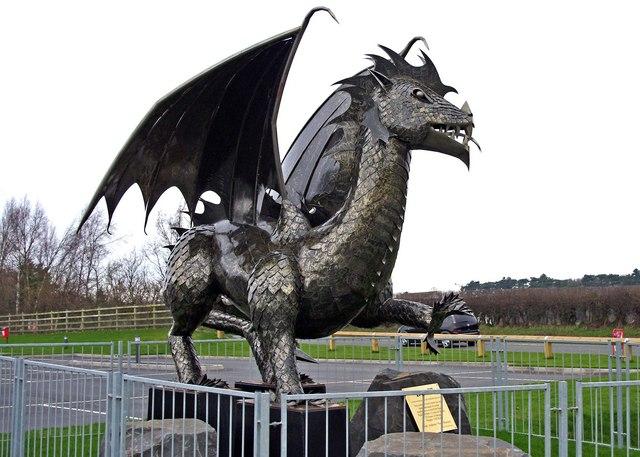
This Friday is St David’s Day, the annual celebration of Wales, Welsh culture and history. Wales is a unique nation, it is one of the oldest Celtic civilisations. Welsh is also one of the oldest European languages that is still spoken and written today. This ancient land and people have survived due to a combination of fortuitous events and an uncompromising and courageous spirit.
In 55 BC, the Roman Emperor Julius Caesar pursued his campaign to colonise Celtic Europe. He had already conquered Gaul, but sought to extend his Empire through a wide scale invasion of Great Britain. This was followed by further conquests initiated by successive Emperors.
The battles waged between the native Celts and the Roman invaders were fierce. The tribes which inhabited modern day Wales became notorious for their bravery and tenacity. Welsh warriors reportedly fought naked. This resistance to imperial rule was relentless. However the arrival of the Emperor Magnus Maximus changed the fortunes of the Welsh.
His presence in Welsh history was prophetic. According to legend, Maximus fell in love with a native Briton and married her. As part of his marriage pledge he promised that he would honour her greatest wish. She said that she wanted her father to become the new ruler of the land. This legend is popularly believed to be evidence that Roman rule was weakened, and soon would be extinguished altogether. It is cited as a prophecy that sovereignty would return to the Celts.
However this remained a distant dream. In the fifth century the Germanic division of the Roman Army was sent in to further subdue the indigenous population. The arrival of Angles, Saxons and Jutes plunged this island into a ceaseless cycle of war. They established petty kingdoms and battles for supremacy and power became a constant theme throughout this period of history.
Their power was consolidated over most of the island except for the far western corners, now modern day Wales and Cornwall. Many from these Anglo-Saxon dominated areas sought sanctuary in these places. However the fight against the marauders continued, this in turn created another legend in the heroic figure of King Arthur.
Arthur is an enigmatic emblem of Celtic resistance who may not have actually existed, except in the fervent imagination of Welsh and Cornish nationalists. He is part of a folk memory, in which he was remembered as the victor of the battle of Badon Hill around 500 AD. This victory ushered in a period of peace for the Celtic Kingdoms.
However the Anglo-Saxon Kingdoms were not unified. Battles between rival kingdoms were frequent, some sought alliances with the Welsh to defend their seats of power. King Penda of Mercia allied himself with the Welsh Kings to thwart the fearsome Northumbrians. This alliance did not last for long, it became a familiar pattern of conflict and rapprochement throughout the centuries.
The strength and loyalty of the Welsh people is reflected by the numerous castles that were built as fortresses. These were constructed along the borders of England. The English and Welsh have remained uneasy neighbours, it has been a ceaseless cycle of invasion and concession.
There is only an informal divide between Wales and the counties of Shropshire, Gloucestershire and Worcestershire. The cultural distinction between these areas has also been tenuous historically. The play, and film “Penda’s Fen” which reimagined the battles of King Penda highlights this, when an argument about the correct spelling of the border village “Pinvin” ensues. It is clear, though, that the magical tales that emerge from this tiny but mighty nation are inspirational and continue to reverberate today.
On the 15th February, 1952 the State Funeral of King George VI was held. The King had endured a prolonged, painful and secretive illness before he died. He was just 56 years old and he had been suffering from lung cancer. The circumstances surrounding his condition, and the gravity of his health were kept from the British public. It was in keeping with a Royal tradition. There was a convention that it was necessary to maintain a certain amount of privacy.
The King’s silent stoicism was vital in a time of uncertainty and tumult. His ascendance to the throne was created through accident rather than by design. He lived in the shadow of his older brother, Edward. Edward was confident, clever and blessed with charm and looks. George was timid, insecure and struggled with a stammer. However he was nevertheless inspired by a strong sense of duty, particularly Christian duty.
On the 26th April 1923, the then Duke of York married Lady Elizabeth Bowes-Lyon at Westminster Abbey. The wedding ceremony was imbued with a profound religious significance which the Duke took very seriously. When Archbishop Lang delivered his sermon, his words were ominous, and almost prophetic, he proposed that,
“You cannot resolve that (your marriage) shall be happy, you can and will resolve that it shall be noble”.
These words were understood immediately, but other members of the Royal Family did not necessarily comprehend the notion of the nobility of marriage.
At the same time, the Prince of Wales maintained a more frivolous attitude. He toured the Empire, which encompassed Canada, Australia and India. He behaved more like a film star than a Prince, by divesting with protocol. In 1931, he met the American socialite Wallis Simpson. She was divorced and already married to a businessman. Edward was unconcerned by this, and pursued the affair.
Five years later, King George V died. The new King, Edward VIII refused to sacrifice his relationship with Mrs Simpson. The British public were scandalised by this situation. Eventually, through political pressure, he abdicated and his brother became King. In 1937, the poet laureate, John Masefield wrote effusively about the new King and Queen as “You Sun Birds driving away gloom”. The new Monarch symbolised hope and light in a bleak and forbidding time.
The country then had to deal with War and the privations that followed. However the King had an ascetic philosophy that proved to be invaluable in that dark period. It was an age of deference, and the British people still had a deep respect for the Monarchy. In fact, it was regarded as holy and inviolable.
The office of King was infused with a sacred quality. The body of the King, his family and his possessions were inseparable from the institution. This is a belief that we have neglected in recent years. However this has prevailed since the age of the Tudors, when any injury to the Monarch was perceived as a slight to the nation state as a whole. The King’s eventual decline was hidden from the public for this very reason. It is difficult to explain to anyone who isn’t British why there is a sense of awe and magic that surrounds our Royal Family, and why we perceive them as other worldly, rather than human. However it is part and parcel of our national myth.
On the 3rd February, 1947 the American author Paul Auster was born. His latest novel is the quirky yet elegiac “Baumgartner”. It is a stunning work of autofiction, a startling mix of bathos and grandiloquence. Baumgartner is an alternative, fictional persona of Auster himself. However Auster expertly uses the omniscient voice to guide the narrative. The eponymous hero, Baumgartner is struggling to find meaning and motivation after the unexpected and tragic death of his wife.
Baumgartner is an ageing writer and college professor living alone in New York State. He is attempting to write a book about philosophy, but he is in the midst of grief after his wife Anna drowned at their holiday retreat on Cape Cod. The book is written entirely in the present tense, giving the narrative a distinct film-like quality. The banal episodes of his life are interspersed with deeply personal memories of the free spirited and fearless Anna, a fellow writer and muse.
Clearly, Auster created an alter ego in a veiled attempt to examine his own life, both professional and personal, as he acknowledges that he may not have long left. Anna’s absence casts a long shadow and this forces Baumgartner to reflect upon the nature of human existence itself.
The follies of the past strike him as wasteful and needless, and he observes the shallow nature of human pride and vanity. Life is far too short, and the pettiness of it pains him greatly. Anna’s first love is her high school sweetheart Frankie Boyle. An athletic young man with hopes and dreams, his romance with Anna is thwarted from the start due to the fact that she is not Catholic and his parents do not approve.
However his life is cruelly cut short when he is conscripted to fight in the Vietnam War. He is killed on the battlefield, but not in the romantic way, he steps on a mine and his body is blown into bits. The authorities tried to retrieve as much of his remains to return to the family for the funeral. This once strong and powerful young man is literally diminished almost to the weight of a small kitten. Somehow the arbitrary religious difference that we use to divide the human race seems pathetic. It is really pitiful considering the fact that we are all simply pieces of flesh and blood.
Anna’s demise is also cruel and arbitrary. Her insistence on swimming on the beach late at night costs her life. In the aftermath of her death, Baumgartner keeps her personal effects to remind him of her. He keeps her books, her clothes and all of the letters and poems that she composed in tender moments. These mementoes trigger further memories of his parents and his sister. He is consumed with regret. This sense of rue is deepened by the tragedy of his and Anna’s childlessness.
Auster is a novelist renowned for writing about coincidence and chance, and the final chapter evokes this, as a young graduate student contacts him to enquire about Anna’s work. This final and unexpected denouement startles the reader to question everything about the nature of life and death. The really poignant truth is, we can never control it, understand it or find any coherent meaning within it. With this realisation, perhaps the cruelties that we choose to inflict upon each other will finally seem so pointless.
Art plays a vital role in our lives, both in its creation, and its reception. Many people underestimate its importance, and power. Art has a potency emanating from its beauty. Beauty is a universal concept. However it is difficult to explain in tangible terms, as it has an immediate sensory effect upon us. It evokes a visceral rather than a cerebral response. It is inherently democratic, and whatever the philistines might claim, it is not, and never has been elitist.
However the most popular artists throughout history have had to rely upon wealthy patrons to make a living. Consequently there has been a constant tension between commercial concerns and the necessity for self-expression. Nonetheless the artist always considers his or her audience, as the artist is a consumer as well, but sometimes the fashionable whims of the market can override the personal motivations of the individual artist.
Popularity does not necessarily mean inferiority, nor does it indicate a lack of intelligence. It is easy to be cynical about the most overtly sentimental forms of art. Artists who consciously depict emotive subjects like animals or children are either authentic in their intentions, or exploiting our emotions for monetary gain. It is a paradox that is virtually impossible to untangle. It is no coincidence that the rise of sentimental art coincided with the Victorian age. There were more opportunities to become rich, but this was often at the expense of others. Sentimentality was in itself a reaction to the increasing mechanisation of society.
The landscape artists created motifs for our national sensibilities. Their paintings epitomise us, and as a result they are tremendously popular. The talents and skills are obvious to the onlooker and objectively speaking the art is still beautiful. The emotions that they inspire within all of us are also very real. We feel a sense of warmth and familiarity when we gaze at the images on canvas. These pictures tap into our desire for a simpler, more traditional way of life. However, nostalgia is bittersweet; it is both comforting, and painful.
England was the first country in Europe to industrialise, and these rural idylls capture a vanished world. Other European countries continued to maintain an agrarian economy, so there was little point for continental painters to romanticise the countryside as it remained a working environment.
However, it wasn’t just painters who understood the emotional connection to the land that once sustained us, writers felt it too. Jane Austen composed a moving tribute to the countryside infused with “all the old neglect of prospect”, and paid tribute to “English verdure, English culture, English comfort, seen under a sun bright without being oppressive”. Austen’s words remain rooted within a specific time and place, a more innocent age before the rapid pace of urbanisation. It is a vision of an England that seems so distant now.
The beauty of nature is the ultimate source of artistic inspiration. Artistic expression continued to replicate itself in myriad ways, Gainsborough painted the Suffolk countryside but English pastoral music was a major inspiration. The native sentiment for the countryside resounds within the plaintive tones of William Byrd’s composition “The Woodes So Wilde”. Tudor composers like Byrd were a primary influence on later composers, like the quintessentially English Ralph Vaughan Williams.
Williams himself was associated with Victorian sentimentalism, and his music harked back to a pre-industrial idyll where there was a “community of people who are spiritually bound together by language, environment, history and common ideals and, above all, a continuity with the past”. The one remaining feature in our culture that provides this continuity is the English countryside.
The poet and novelist Thomas Hardy found inspiration from the tableaux of Turner, which he described as “light modified by objects”. Turner drew his own inspiration from the poetry of James Thomson. His paintings are an exquisite rendering of the spirit of his verse, as they are the visionary depictions of “the bright enchantment”, “the radiant fields”, “the dew-bright earth” and “coloured air”. Watercolour art is the greatest medium to illuminate the darker side of English climate and aspect. The shadows, fleeting light, the gloomy atmosphere of melancholy and sense of fate are all apparent, and perpetually reverberate in the English imagination.
Milton’s poetic musings are filled with stark imagery, the silhouettes of the moon, and the dark, overhanging trees. These haunted landscapes were vividly recreated on canvas by Samuel Palmer. It is hard not to feel intense emotions like sadness and loss. The artists knew this and made it their primary endeavour.
It is regrettable that the most stone hearted fail to feel anything about art. These are people who seek a total repudiation of a collective culture and history. They are purely utilitarian and functional, and see no purpose in anything ornamental or decorative. They do not understand the importance of beauty. Many of them actively champion ugliness because that is a reflection of their inner nihilism.
These are the modern day iconoclasts, radicals and revolutionaries who have a burning desire to destroy, to undermine and to abrogate anything that represents joyfulness. They have cynical, bitter souls and take immense pleasure in destruction. They have no imagination, and have little understanding beyond material reality.
Tragically it is impossible to explain the transcendent to them because they literally lack the faculties to comprehend that concept. They also lack the intelligence to attach any significance to the past, because they only perceive the present and the future.
They have the erroneous belief that progress is both limitless and linear, and are convinced that history and tradition are regressive and a barrier to an enlightened and more equitable society. This is the consequence of a technocratic society that has drifted away from more sustainable, natural modes of living.
Civilisation is increasingly mechanistic, rather than organic. In this cold and functional atmosphere, minds are dulled and deadened. Artistic innovation declines and the culture turns moribund. The future of this country looks bleak. We need a cultural revival.
Samuel Richardson was a renowned author from the Georgian era. He is regarded as one of the first authentically English novelists, as he encapsulated the character and sensibility of the people. He began his career in the publishing business, and was responsible for printing political pamphlets and establishment periodicals like “True Briton”.
However his career in fiction began in auspicious circumstances, when two book-sellers approached him and asked him to print a book of letter templates. He acquiesced with the request, but with the proviso that the letters should contain a moral purpose. In 1740, the epistolary novel “Pamela” was published. The eponymous heroine is a poor servant girl who is captured by a wealthy landowner, and forced to attend to his every whim.
Pamela’s innermost thoughts are detailed in a series of letters, and they reveal her fears and doubts. She is naive and artless, but imbued with a feeling of duty for her master. In an age characterised by the cultural power of wealthy and entitled aristocrats, Pamela’s unique voice is striking, and strident. Pamela’s strong morality proves to be a liberating force, as she tempers the behaviour of her master and marries him. She transforms from a lowly maid into the lady of the house.
“Pamela” was followed by a further series of epistolary novels that explored similar themes. His fictional work was immensely successful and tremendously influential. Richardson was a major influence on Jane Austen. His literary success was down to one simple fact. It was truly radical to portray a woman from a lower class in a sympathetic light, even to present her as fully human and capable of strong feelings was an outstanding achievement.
Richardson’s example reveals how powerful literature can be, giving individuals a voice when society deprives them from speaking is a sign of its strength within culture and society. It is sad to reflect that in the twenty-first century literature has been relegated to a lesser activity. It is viewed as a hobby for intellectual elites.
However this is a bigoted opinion that is just untrue, allowing poor, marginalised people the space and time to write can transform society. Without literature there will be no possibility of change, there will be fewer opportunities to understand and to empathise.
On January 7, 1891 the renowned African-American author, documentary maker and anthropologist Zora Neale Hurston was born. Her reputation as a novelist and short story writer was acknowledged by her fellow contemporaries Langston Hughes and Alain Locke. However her anthropological work is less well known.
Hughes and Locke’s literary patron, Charlotte Osgood Mason also befriended Hurston. Mason took a special interest in Hurston’s academic writing. At that time she was at Columbia University studying anthropology, and her research was focused upon the folklore of the African diaspora, in America and the Caribbean.
Mason’s support proved invaluable. She provided the funds that enabled Hurston to conduct research across the southern United States. Hurston embedded herself with black communities throughout the region, and this experience provided enough material for a series of essays.
In 1935, these essays were published. They were incorporated into a book entitled “Muses and Men”. One year later she followed up her research into African diasporan folklore with a trip to Jamaica and Haiti which was funded by the Guggenheim Foundation. In 1938 the book “Tell My Horse” was published, which detailed her extraordinary journey and experiences within a distant and hidden subculture. Hurston was a pioneer. No-one had even attempted to understand, let alone write about a people that seemed so unusual and exotic to western readers.
The beliefs maintained by the people of these two islands differed slightly. However there was a similar culture that had been created by a common experience, the ancestral memory of captive slavery. A new creed of rebellion emerged from this experience, it was only interpreted as frightening and demonic by their masters. It was deliberately subversive to challenge their power.
Hurston observed that the poor, disenfranchised and dispossessed living in the tumult of a post colonial society were more inclined towards superstition. The rich and powerful did not fear the unknown, as their privilege allowed them to enjoy their good fortune. Those who felt continually afflicted by bad luck sought alternative explanations that appeared to others to defy reason.
The realm of magic was where these unconventional ideas flourished. It was an otherworldly place of supernatural beings. Some were demonic by virtue of the fact that they had been cursed. In Haiti the zombie is an unlucky soul that can never die. It is doomed to work for the rest of its life as a punishment for an aberration committed in its mortal existence.
Zombies emerged as a legend during the peak of slavery. They were grotesque creations cursed in an eternal cycle of work and death. Some Haitians understood the zombie as a metaphor, but others remained convinced that they really existed. Zombies are the African version of the Faust myth, where a man dissatisfied by his mediocre existence sells his soul to the Devil. However in the myth Faust is no longer in control of his mortal life and the Devil becomes the master of him.
Hurston understood that every society could be manipulated by powerful authority figures. It was particularly acute in countries that were unstable politically, even the most intelligent members of society can be persuaded to believe the most irrational theories.
Hurston was informed that a literal zombie existed and she agreed to meet her. She sought a rational explanation for her existence and consulted doctors at the main hospital in Haiti’s capital. She suspected that street drugs had induced this unusual physical and psychological state. However it was still impossible to prove whether this woman was telling the truth, or was simply unwell. Hurston’s research was groundbreaking, her style of prose was clear-eyed and objective. She lacked condescension, which was crucial. It was fascinating to read such an expert analysis, which would have sounded so different if it had been conducted by someone with preconceived prejudices.
Hurston broke the mould in so many ways, she challenged the notion that black women were helpless victims of white oppression. She contradicted the prevailing political orthodoxies by speaking her own voice, it was perturbing to others that she voted Republican and held conservative views. However liberating herself from narrow preconceptions was the key to her success, the greatest writers are contrarian by nature, as they revitalise old ideas and make them new and fresh.
On the 21st December, 1119 the English martyr, priest and court political adviser, Thomas a Becket was born. He was murdered at the age of just 51, in an assassination, supposedly upon the orders of King Henry II.
Becket was the Archdeacon of Canterbury and the Lord Chancellor. These roles embraced both the sublime and the mundane, as he was judge, secretary and diplomat all rolled into one. Becket was considered trustworthy, but the Kingdom was fragile and Henry needed a confidant. He hoped that the Church and state would stay supreme under his command.
At that time England was defined by the Church. Clergymen were responsible for all of the administrative duties of the state. As a consequence it seemed almost inevitable that there would be a fundamental question over who had supreme authority, was it the King, or the Church? Henry was reportedly a vain, pompous ruler who regarded Rome with disdain.
Becket’s loyalty however remained with Rome, and the Pope. The King had drawn up legislation called the Clarendon Constitution. These were laws which would increase his power and weaken the connection with Rome. Becket refused to sign these off, and this act alone destroyed their personal and professional relationship.
Once the connection with the King was severed, Becket fled to France. Pope Alexander III offered to mediate and sent Papal legates to discuss proposals that he thought would be favourable to both parties. Henry offered a compromise if Becket agreed to return to England. He was believed to have uttered words which have now become legendary, imploring his most trusted knights,
“Will no-one rid me of this turbulent priest?”.
These four knights were Reginald FitzUrse, Hugh de Morville, William de Tracy and Richard le Breton.
On the 29th December 1170 Thomas a Becket was confronted in Canterbury Cathedral. FitzUrse, de Morville, de Tracy and le Breton dictated their demands, telling him that he should travel to Winchester to explain himself to the King. When he refused, they drew their weapons. As their swords rained down upon him his last words were,
“I am no traitor and I am ready to die”.
His loyalty to the true authority that transcended the earthly power of Kings, and his courage in the face of mortal tyranny proved to be inspirational to the devout people of England.
His martyrdom reverberated throughout the centuries, and inspired playwrights and poets of the modern era. Mediaeval allegories alluded to the dark and dramatic circumstances of Becket’s death, and his ultimate sacrifice.
The numinous quality of these poems, and the profound truths that they reveal, also moved T.S Eliot and W.H Auden. Auden’s poem “The Wanderer” is a reiteration of an earlier allegory based on spiritual struggle and sacrifice, as the opening stanzas reveal,
“Doom is dark and deeper than any sea-dingle
Upon what man it fall”.
This poem, composed in 1930 was a reflection of an austere time, with tyranny and authoritarianism on the distant horizon. We must remember the bravery of individuals like Becket who sacrifice their lives to counter the threat of tyrants.
The 13th of December is the shortest day of the year. It is also the feast day of St. Lucy, a fourth century Christian martyr who brought succour to Christians persecuted by the Emperor Diocletian.
The legend states that she sacrificed her life to feed and give aid to Christians hiding in Roman catacombs. She wore a candle lit wreath on her head to allow her to pursue her divine mission in the dark. St Lucy represents hope, light and life on the darkest day of the year.
St Lucy’s Day is especially poignant in Northern European countries, as winters in this region of the world are characteristically dark and bleak. In Norway, Sweden and Denmark evening parties are held, and special carols commemorating her are sung. Girls dress in white and wear candle wreaths in special processions and biscuits and saffron buns are distributed.
In the UK there are no official celebrations, but in the past, the day was marked with prayer and devotion. As we are living in a modern, more secular age we have forgotten that our ancestors lived in a time dominated by darkness, and very little light.
We live with much greater comfort and ease since the invention of the light bulb, but we are no longer exposed to natural light. Also the light emitting from television screens and computers has prevented us from experiencing the natural darkness of night. Our ancestors did not have this luxury, they had no choice but to endure the darkness of winter.
However it also meant that the winter months could be dedicated to reflection, and this inspired some of our greatest poets. The sixteenth century poet John Donne was inspired by the occasion of St Lucy’s Day and composed a poem dedicated to her. It was entitled “A Nocturnal Upon St. Lucy’s Day, Being the Shortest Day”.
Donne had endured his own darkness, as a clandestine Roman Catholic in a Protestant country at a time when persecution was rife. Donne’s fondness for paradox stemmed from the ambiguity of his identity. His poems reflect the profound affection he felt for his Catholic upbringing.
Donne’s devotional poems dedicated to the saints are the most affecting and powerful. A distinct sense of nostalgia for that vanished Catholic England emanates from the page. Although we may dwell in darkness, we can survive with the light in our hearts.