Turning the Tide

(Illustration of the Gospel according to John, taken from the Lindisfarne Gospels).

On the 31st August 651 AD, the Irish monk and missionary St Aidan died.This is a date in the Christian calendar dedicated to his martyrdom and legacy. He is revered all over the British Isles, but his name is remembered with particular affection in the North East of England for his role in reconnecting the people with their Christian faith.

Seventh century England was altered by history. It did not resemble the England of the previous centuries. England used to be a pious Christian nation, but at this stage existence had dwindled into a spiritual void. English life was a stark contrast from the time before when Christianity was firmly rooted within the nation’s identity.

This was a consequence of intervening events, as soon as Roman rule collapsed, this fragile and vulnerable island was ripe for invasion and plunder once again, but this time England was faced with the terrifying horde of Germanic warlords.

This invading army of Angles, Saxons and Jutes were resolutely pagan and looked down on the native religion. They scorned the religious sensitivities of the people that they subjugated. This foreign creed quickly supplanted Christianity. The indigenous people relinquished their religion and adhered to the colonisers’ paganism, but this was solely due to expediency and self preservation.

There were a minority of courageous Christians who refused to convert and they fled to Scotland, Wales and Cornwall. These new communities were corners of Britain where Celtic Christianity began to flourish.

However Paganism across the Northern edges of the continent soon began to wane. The Franks had accepted Christianity rather than resist it, and they were developing a degree of sympathy towards the Church in Rome. The Pope himself sent emissaries across this benighted part of Europe to bring light to those living in darkness.

The conflict between these competing belief systems was protracted and violent. Most of Britain remained under a system of Anglo-Saxon clans vying for power. It was feared that a tribal nation could never succeed as a peaceful and harmonious entity. In North East England one long battle between rival powers ultimately sealed the fate of Christian England.

Oswald was the son of Aethelfrith, who was killed in the battle of the River Idle. Oswald’s elder brother, Edwin then inherited the kingdom of Northumbria. The rival kingdom of Mercia, led by Penda fought and killed Edwin in the battle of Hatfield Chase.

At the time of Edwin’s death, Oswald was safely exiled in Scotland. While he was ensconced within the realm of the pious Scottish Kings, he converted to Christianity. Then as soon as he ascended the throne of Northumbria he was determined to return the entire nation back to Christianity. He needed the right person to truly represent the faith.

He sought advice and recommendations from the Scottish bishops who had links in Ireland. Eventually Aidan was appointed as the spiritual envoy for the Northumbrian people. Aidan began his mission on the island of Lindisfarne. Aidan founded a monastic community at Lindisfarne as an evangelising hub and centre of learning. Aidan’s example inspired rich and humble alike and brought light to a dark and troubled corner of England. He founded churches and schools which continue to venerate him.

In nearby Durham, a young shepherd named Bede was inspired to take holy orders, following the example of Aidan. Bede soon became a renowned writer and chronicler of English history, now known as “The Venerable Bede”.

He was later acknowledged as a foremost scholar who played a vital role in English literary history. His “Ecclesiastical History of the English People” is a text which has informed and shaped English literature since its publication.

The book traces the formation of a distinctly English civilisation, based entirely upon the rebuilding of its Christian foundations. He documented the enduring and painful struggle from its inception. He describes the existential battle for England’s soul in plaintive tones, explaining that,

“For of what went before it or of what comes after, we know nothing. Therefore, if these new teachings can inform us more fully, it seems only right that we should follow them”.

Bede told the extraordinary lives of the Northumbrian monks who lived austere lives on a cold and windswept part of England. It was a dark and foreboding time, but illuminated by moments of magic and miracle. The life of St Cuthbert was a perfect illustration of this.

Bede writes about two extraordinary events. In the first event the young monk walks out to the tide’s edge to pray and two otters magically appear to keep his bare feet warm and dry. In the second Cuthbert constructs a straw hut on the beach as a retreat, but a swarm of ravens snatched the straw for their nests. The monk castigated the birds, but later each bird returned in obeisance, spreading their feathers out and with their heads bowed in penitence.

Cuthbert is remembered with particular devotion at Eastertide, when even to this day pilgrims walk barefoot along Lindisfarne beach at low tide praying for miraculous intervention. Legend states that pilgrims afflicted with chronic ailments have been cured by the waters. At high tide the island lies remote and marooned from the outside world. It seems a perfect metaphor for a spiritual outlook which is too often isolated from modern, secular living.
Tower of Ivory

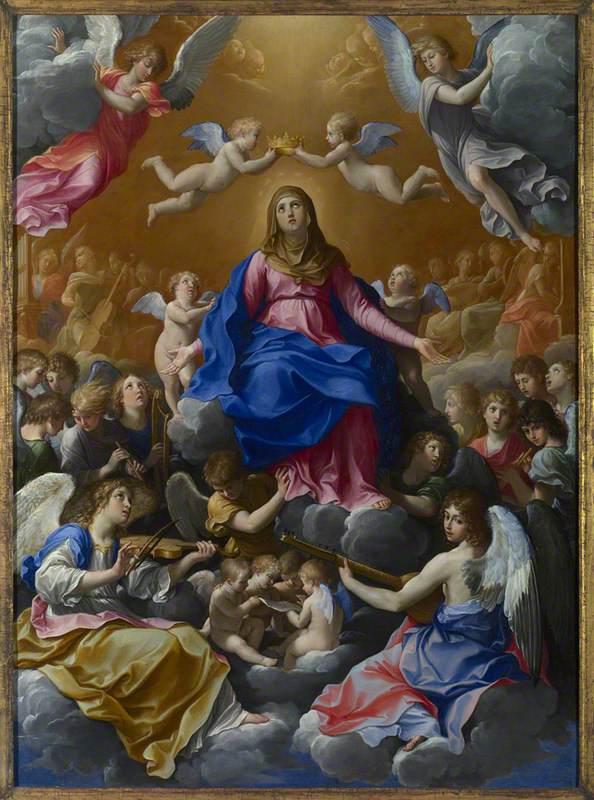
The 22nd of August is an important feast day in the Christian calendar. It is a day which honours and venerates the holiness of the Virgin Mary. It is the day in which she is assigned the title Queen of Heaven. It is a day of dedication and prayer observed by the Catholic Church, and by the more traditional Anglican Churches.

In the Bible, the Mother of Jesus is made Queen at the end of her mortal life. This ultimate honour is bestowed upon her as a reward from God. God had commanded her to be the Mother of Jesus, and her courage and fortitude to bear this onerous and ominous responsibility lead to her reward in eternal life.

The Church continues to remember her and her vital part in the story of Jesus Christ and the founding of a worldwide religion. It is undeniable that she played a crucial role in Church history. According to scripture, Mary came from a high born family in ancient Israel. At this time the Jewish people endured many hardships and struggled to survive as a people, owing to outside threats and belligerents from other Empires. Child mortality was high, and a large family was perceived as a blessing.

Mary’s mother, St. Anne, was married to St. Joachim. They suffered the indignity of childlessness for many years, and prayed for divine intervention. When Mary was conceived, both of her parents were at an advanced age, so their daughter was a miracle. This became known as the “Immaculate Conception” and a new prophecy surrounding Mary began from this very moment.

When Mary was around 14 years old, she was betrothed to Joseph. However a miraculous event intervened before her marriage. An Angel sent from God told her that she was to bear the son of God. The Angel Gabriel told her that she was going to be the bearer of a son sent into the world to redeem the fault of mortal humans. It was a miracle and a blessing that was immortalised in the Magnificat, Mary declared,

“My soul glorifies the Lord, and my spirit rejoices in God my Saviour, for he has been mindful of the humble state of his servant”.

However Mary and Joseph still lived under the authoritarian grip of the Roman Empire. Joseph was ordered to return to Bethlehem to sign the census. It did not matter to the Romans that this was a revered family in holy Israel. Mary was due to give birth but could not find a place to stay, the only place available to them was an animal yard. The holiest of births occurred in the most lowly of places.

This paradox is the key to the Christian faith. It is the reason for its survival against terrible odds. The story of how a well respected girl from a good family could still maintain her grace amidst degradation and filth still remains powerful and compelling today. In addition to this she is the Mother of God and a divine intercessor who continues to have a towering presence in the faith.

Conjunctions Of The Mind

On the 16th August 1678 the English poet and politician Andrew Marvell died. His poetry shared similarities with John Donne and George Herbert, both in terms of style and subject matter. They became known as the “Metaphysical poets”. Their poetry was bold and innovative, an experiment with poetic form and convention.

Seventeenth century England was characterised by political and religious turmoil and instability. National insecurity and fragility lead to fundamental questions surrounding human existence. It was a conflict between reason and spirit, which engaged the minds of the greatest thinkers, including Sir Isaac Newton.

Marvell’s own personal allegiances were conflicted. Initially he admired the reign of King Charles I. The situation changed dramatically during the English Civil War. Amidst the tumult he was safely away from England. He was living and working in Italy, reportedly as a tutor for a wealthy aristocrat. However upon his return to England the new regime was already in place and he maintained an allegiance to Oliver Cromwell.

In 1650 he composed “An Horatian Ode upon Cromwell’s Return From Ireland”. The poem was a solemn valediction and lamentation upon the events that had divided the nations for so many years. It was an attempt to find an uneasy balance between the horrors of regicide and the moral necessities that lay behind Cromwell’s campaign.

At the time of the poem’s publication he was employed by Lord General Thomas Fairfax, the former commander of Cromwell’s Parliamentary Army. Fairfax had appointed Marvell as the personal tutor for his daughter.

Marvell resided at Nun Appleton Hall, which was part of the Fairfax estate. This inspired his poem “Upon Appleton House”. Ostensibly this was a poem dedicated to the beauty of the countryside which surrounded the estate, but it was also a poem which explores a wider theme, namely Man’s place within nature and the world.

The poem can also viewed as a metaphor for England itself, a once thriving garden dwindling into dust as he opines that,

“Annihilating all that’s made

To a green Thought in a green shade”.

Marvell lamented that the distinct English sensibility was vanishing. These once proud, courageous and imaginative people only existed within a shadow or memory.

In 1657 Marvell was employed as Oliver Cromwell’s Latin Secretary. One year later Cromwell died and was succeeded by his son Richard. In 1659 Marvell stood for election in the Third Protectorate Parliament and won the seat of Kingston-upon-Hull. However when the monarchy was restored a year later he narrowly avoided punishment for his close involvement with the Republic. He also helped to secure the reputation of John Milton who faced a similar fate.

He served another term as Hull’s MP. He died unexpectedly and suddenly after attending a constituency meeting. Rumours that he had been poisoned by political rivals were later proven to be false.

It has now been revealed that he had been suffering from malaria, and his death was attributed to a reaction to the medication that he was prescribed. It was a cruel twist of fate that he refused to take an alternative medication because it was an import from the continent. It is also a tragic irony that this English poet’s death occurred as a result of his unswerving loyalty.

The Lamps Are Out

(Photograph- Port of Rotterdam, from the book “This Is Europe” by Ben Judah, 2023)

On the 3rd of August, 1914 the British Foreign Secretary Edward Grey made the solemn announcement that,

“The lamps are going out all over Europe. We shall not see them lit again in our time”.

His stark words were in response to the chaos unfolding across the continent. These frightening and chaotic events preceded the outbreak of the First World War, now considered the first total war in the entire history of human civilisation.

Europe in the early twentieth century appeared on the surface a place of decorum and genteel civility. However there were barely perceptible but very real threats to the stability and cohesion of the continent. At that time the continent was dominated by mighty and rival Empires, chief amongst them were the Triple Alliance of Germany, Italy and Austria-Hungary. Britain, which had allied itself with France and Russia feared the military and economic powers of the Triple Alliance and was secretly accumulating and fortifying its naval defences.

The Austria-Hungarian Empire was fragile and weakening its grip on the many fractious nations it ruled. Nascent nationalist groups were becoming increasingly emboldened, and determined to destroy the Habsburgs’ dominance. On June 28, 1914 a Serbian nationalist assassinated Archduke Franz Ferdinand and his wife, Duchess Sophie. The assassin, Gavrilo Princip, was nineteen years old and a defiant defender of Serbian independence.

The government of Austria-Hungary exploited the assassination and used it to declare war against Serbia in a vain attempt to preserve the Empire. War was the sole justification to suppress any sentiment of Slavic nationalism within the Empire. Russia, however, allied itself to the Serbian cause, and found support from Britain and France. Germany backed Austria-Hungary and The Great War began.

The events that unfolded destroyed the myth that Europe was a harmonious and cohesive entity. It alarmed the statesmen of Britain and France that Germany was planning to invade Belgium in order to attack France. Belgium had remained neutral, and this was a red line that could not be crossed.

Nonetheless Germany went ahead and invaded Belgium on the 4th August, the British sent them an ultimatum demanding that they withdraw. This ultimatum was ignored. There was no argument. Britain decided that it should declare war against Germany. British troops fought valiantly to preserve a semblance of civilisation in the trenches across France. The experience of the young men fighting on the frontline led to a reckoning, and most importantly a timely reassessment of what it truly meant to be “European”. Ultimately the devastation wrought by the First World War also led to the Second World War.

Clearly Europe is not a utopia, it has been a continent at war with itself for many decades. Organisations like the European Union were established to provide economic security for the disparate nations, but these relationships have not been seamless. This is particularly true for Britain, which has divested itself from the EU, for economic and cultural reasons.

However there are still commentators who feel aggrieved by Britain’s exit and are seeking reasons for rejoining. There are those on the left of the political spectrum who maintain a naive belief that Europe is a utopia and the distinct qualities that make Britain unique literally have no meaning in their fantasy. These commentators are characteristically malevolent and unkind, though crucially their opprobrium isn’t directed against the assembled bureaucrats who made a thorough mess of the exit agreements but instead towards the ordinary Brexit voters.

The commentary from these self appointed experts is extremely revealing, there is an inherent snobbery and arrogance in the comments that they choose to make. They are also very selective about the facts that they choose to cite when they are asked to defend the benefits of remaining within the EU.

These commentators are also unaware of their own ignorance, yet gleefully point out the ignorance of their detractors. They are convinced that they are not British but “European” and declare that they are fluent in French and German, yet strangely they are less inclined to learn Hungarian or Polish.

However the worst characteristic displayed by these remain snobs is the sneering contempt they express for British nostalgia. It is particularly contemptuous the disdain that they show for the courage of our ancestors in both world wars. Britain bravely defended the Belgians when they were surrounded by belligerents, and repelled them. They knew that a small and vulnerable nation required vital levels of support, but the fallout from The Great War was immense, it was almost a Pyrrhic victory as it led to the Second World War.

In spite of the general distaste for war in general, the Second World War was vital for securing freedom. Britain was engaged in that war longer than any of the European allies, it was at an immense detriment to its economy and its people but it was right and just.

The people who joke about Brexit voters being obsessed with World War Two conveniently forget that at least 400,000 British troops died fighting Fascists and Nazis in Italy and France and 67,100 civilians paid with their lives during the air raids. They also omit the fact that during the crisis of the 1930s the British Labour Party was opposed to the Second World War right from the beginning, slandering the peacemaker Neville Chamberlain as a “warmonger”. Their leader Clement Atlee also criticised Chamberlain for spending excessive amounts on defence. It now seems perverse that the same philosophy of “European” cooperation could have allowed a Nazi dictatorship to take root. The dreadful myth of European homogeneity needs to be dispelled before another conflict destroys us.

The Last Emperor

On the 26th July, 1533 the Spanish conquistador Francisco Pizarro sanctioned the death of the Sapa Inca Emperor Atahualpa. Atahualpa was the last reigning emperor of a vast Empire which encompassed modern day Peru, Ecuador, Bolivia, Argentina and Chile. Pizarro was emboldened by his personal odyssey to conquer South America after receiving official Royal assent in 1529.

Pizarro was inspired by the example of his contemporary and fellow Spaniard Hernan Cortes. Both were imbued with a sense of adventure and zeal to enter into a new continent. However there were marked differences between the values and practises of these different civilisations. The early conquerors were informed by the sensibilities of their Catholic faith, whereas the indigenous people held animist beliefs and practised ritual sacrifice to appease their gods.

The Conquistadors were impressed by the advanced level of infrastructure and government. They were also aware that this was a land of riches, and that there was material opportunity. It was an immense shock to them that their culture was so different, especially concerning human sacrifice. This was enough to convince them that they were not equal in terms of their humanity. This gave them enough justification to enforce colonisation and enslave the populace.

Many of these early Spanish imperialists quoted Aristotle, stating that,

“It is clear that some men are slaves by nature and others free by nature”. Similarly the Franciscan brothers who accompanied them failed to see a common humanity. They were astonished that they were a people who chose to sacrifice their own children to appease the rain god in times of drought.

One was reported to have said,

“It was the clamour of so many souls and so much bloodshed as an affront to their Creator.”

A greater evil, though unintentional, was inflicted upon the native people. The Spanish colonisers brought infectious disease including smallpox from Europe. The locals had no immunity and many died, including Atahualpa’s father, Huayana the previous Emperor.

At the time of Pizarro’s expedition the Inca Empire was weakening and fracturing. The ethnic groups which once held unswerving loyalty to the Emperor were becoming increasingly hostile and volatile. Atahualpa’s grip on power was fragile, Pizarro seized upon this as an opportunity to consolidate power.

Amidst civil war, Atahualpa was exiled to a remote location in the Andes. Pizarro visited him to negotiate, and made a formal request. He was informed that he must renounce his idolatrous beliefs and pay homage to the Spanish Crown and also acquiesce to the Roman Catholic faith.

Atahualpa agreed, but with a caveat. He ordered Pizarro to return the gold, silver and emeralds that were stolen by the Spanish in an earlier raid. It is unknown whether this order was heeded and that the loot was actually returned, but Pizarro was unconvinced by Atahualpa’s dedication as he sensed that it was just a ploy to preserve his life and wealth. He was charged with treason and sentenced to death. However the gruesome manner of his execution, he was garotted, exposed the double standards of the imperialists. It was surely hypocrisy for the Spaniards to decry the barbarism of the Inca people while committing atrocities themselves.

In 1537 Pope Paul III issued an encyclical forbidding the enslavement of all people indigenous to the Americas. Five years later the Spanish Crown passed the same law. It was universally agreed then that native cultures and traditions deserved respect and the people should be allowed to live in dignity.

Nonetheless European imperialism has allowed the Americas to develop and thrive. It is often forgotten that before the arrival of modern medicine sickly babies had their heads smashed against rocks. In the modern world we no longer justify such cruelty, and we rightly believe that human sacrifice in general is abhorrent. In the quest to denounce the supposed evils of imperialist powers we ignore the benefits wrought by them.

The Passion Bearers

(Russian folk art painting detailing a popular foundation myth of the Russian Empire which states that the ancient Slavs conquered the globe on woolly mammoths).

On the 17th July, 1918 the last Tsar of Russia was assassinated, along with his remaining heirs. This violent and pitiless end to the Romanov dynasty was ultimately an inevitability. It occurred as a consequence of the years of penury and near destitution endured by the Russian people. It was especially acute towards the end of the First World War.

In February 1917 food shortages in major Russian cities provoked riots and mutiny in the lower ranks. One month later Tsar Nicholas II was persuaded to abdicate by the Provisional Government. The Government initially placed the Romanovs under house arrest. They were confined to their quarters at the Alexander Palace by armed guards. Attempts were made to exile the family to the UK in the care of the Tsar’s cousin, King George V.

However these attempts failed and they were sent to Siberia instead. This was supposedly for their own protection, as their lives were in danger. There was a foment of revolutionary fervour in the populace and it was in an effort to shield them.

However in October the Bolsheviks seized power and the feeling in the country towards the family had turned. They were sent to a remote location in the Ural Mountains. They were forced to live in a deliberately austere manner by the guards. On the night of their assassination, the guards went into their sleeping quarters on the pretext that they were going to be moved to another safe location. They were corralled into the basement and then shot.

The Russian Revolution was a bloody, merciless event which altered the spiritual identity of the nation and its people. As the Soviet Union took shape, the old religion of Orthodox Christianity was subject to censure and eventually was banned altogether.

( The current leader of the Russian Orthodox Church, Patriarch Kirill).

The beliefs of the ruling Communists were unyielding, any perceived threat to their dogma had to be suppressed. In their eyes cold rationality surpassed any ancient superstition. It did not matter to them how strongly the people felt about religion, depth or sincerity of thought literally had no meaning. The Soviet years were bleak for most of its citizens until the regime ceased in 1991.

Russia reinvented its own history in the intervening years. One hundred years after the Romanovs murder, attempts were made to rehabilitate their image. They were recast as “passion bearers” of the Russian Orthodox Church rather than privileged autocrats. Museums and Churches were dedicated to their legacy.

Unlike the cultures of the West, which has encouraged a campaign of decolonisation and delegitimization the opposite has occurred and Imperial Russia is being revered and reinvigorated. However the consequence of such a campaign does not bode well for the rest of the world.

A Colony of Devils

Literature plays a vital role in maintaining democracy and upholding civilised society. Every single writer throughout history has attempted to transcend political concerns or sensitivities to express something which is deeply real, raw and human. The power of writers continually alarm governments, who fear the effect of their words on the populace. The governments with the most fragile grip on power are those who wield tools of censorship to suppress their voices.

The methods utilised vary, from dark propaganda to malign the artistic reputation of writers to imprisonment and even state sponsored assassination. This has been observed throughout Vladimir Putin’s regime. Putin’s paranoia is almost apocryphal. It is reportedly so entrenched that he has acquired peculiar superstitions. One surrounds Mikhail Bulgakov’s masterful Soviet era satire “The Master and Margarita”. According to some sources, he is so frightened by the historical parallels evinced in the novel that he has banned any mention of the book in his presence.

Bulgakov’s narrative is subversive and dark. Black magic emanates from every page. It was also a major influence on the Kenyan author Ngugi wa Thiong’o who found a great affinity with Bulgakov. He could relate to the absurdity of the characters and perceived that it was a veiled allegory of an autocracy which had divested itself of any moral authority.

Post colonial Kenya was a society filled with contradictions. It was something that Ngugi grappled with throughout his life. The legacy of the British Empire overshadowed his education, all of his schooling was conducted in English and his indigenous traditions were stifled. He admired Western authors but his heritage was African. Decolonisation was a painful psychological process.

He was a young man when independence was achieved, but his hope for freedom was short-lived. The new governments were hypocritical and corrupt. Ngugi’s response was to write a series of books and plays criticising the authorities. In 1977 he was detained in Kamiti Maximum Security Prison. He was held for a year without trial, the regime tried to break him for objecting to their rule. Within that year he was subject to cruel punishments, he was given pointless and degrading tasks like breaking rocks.

The whole purpose of his detention was to induce a kind of derangement which they hoped would change his political opinions. Their hopes were in vain because the exact opposite occurred. Within that year he composed a novel which was written on prison toilet paper. “Devil on the Cross” is a powerful allegorical novel in the mould of “The Master and the Margarita”. The characters are the most malign archetypes of human greed, lust and avarice but in this subversive moral universe they are rewarded with accolades and respect.

Ngugi’s satire holds a mirror to the grotesque effects of power. The image reflected is ugly and uncomfortable but it is unfortunately familiar.

A State of Independence

The 4th of July is a date of immense importance and significance for the people of the United States of America. It is commemorated annually with extravagant celebrations of parades and fireworks. The festivities are designed to be bombastic, triumphant displays marking the country’s independence.

These celebrations remind Americans of their history. Every American is aware of the struggle endured by their ancestors. It was a long battle that they fought to extricate themselves from the British Empire. Eventually their independence allowed them to forge their unique way in the new world.

It is a day which resonates with every American, not just culturally and politically but also emotionally. Families across the country mark the day with their own celebrations. However in spite of the event’s obvious joyous nature, there is a dark side. Every battle has consequences, no matter how righteous the cause.

This is an unfortunate, if inevitable part of history, as the Anglo-American poet T.S Eliot once said,

“Whatever we inherit from the fortunate we have taken from the defeated”.

The belligerents who sought complete liberation and freedom from Britain called themselves “Patriots”. They were militantly opposed to the King and proclaimed a Republican cause. Their defiance was taken up by allies in Britain, many of whom were in the Whig Party.

The Whigs were distinct from the Tories, the Tories were committed to the long standing conventions of the British Empire and the Monarchy. In contrast the Whigs had a philosophy which favoured free trade and economic libertarianism, ancient cultural traditions and ideas like natural hierarchy and the Established Church had little or no meaning for them.

The Tory writer and thinker Samuel Johnson felt a particular distaste for these “Patriots” in the USA and in Britain. His most widely misquoted phrase is now taken out of context by the historically illiterate. His palpable disdain for Whig traitors was evident when he said that “patriotism is the last refuge of scoundrels”. The imposition of taxes was the chief bugbear for both Patriots and Whig allies.

The cultural schism still exists between Britain and America. British people are still loyal to the Monarch and are less inclined to ideas of radicalism or revolution. There is a general conformity and consensus in the population to adhere to rules and regulations, including paying taxes. American people on the other hand generally dislike paternalistic governments and believe material success should be unhindered by tax.

American Presidents or Presidential candidates who seek to intervene in their citizens’ lives do so at their peril. During the 2016 campaign Hillary Clinton made the fatal mistake to refer to her opponents supporters as “deplorables” and it cost her the Presidency. Donald Trump deliberately evoked the spirit of the first Patriots and won. However Johnson’s remark has returned to haunt the American people, and perhaps it is worth observing that independence has a cost.

Glorious Summer

On the 26th June 1483 Richard III ascended the English throne. His short but eventful reign, which ended in ignominy and war is remembered as an indelible stain upon our history. The King himself has been caricatured as a jealous, bitter and pitiful character. He is presented as a devious and manipulative figure who plotted his own path to power, but ultimately signed his own fate in his defeat at the Battle of Bosworth.

William Shakespeare’s play “KIng Richard III” is the ultimate study of a villain. He depicts him possessing all of the malign aspects that characterise tyrants and dictators. He is arrogant and afflicted with delusions of grandeur. He is prepared to do anything for his own ambition. He has no moral compass.

It is clear from the opening soliloquy that he is narcissistic, but like all narcissists he is thin skinned and inclined towards self pity. Shakespeare alludes to Richard’s disability, and infers that he is solely focused upon wreaking revenge.

In less enlightened times such inferences were accepted, but today we rarely believe these stereotypes about disability. However his masterful character study allows us some insight into the darker and destructive impulses that motivate authoritarian leaders throughout history.

War is the inevitable consequence when the power hungry achieve their positions. These dangerous individuals have no qualms, indeed Richard was believed to have murdered members of his own family. His own fate, however, is truly pathetic. The exiled Henry Tudor, Richard’s Lancastrian rival, collaborated with Welsh military forces to unseat him. The battle was decisive, Richard was isolated on the battlefield when a pikeman advanced, stripped him naked, mutilated his body and strapped his corpse across a horse.

He was the last English King to die in battle, at the end he was no longer this bright “sun of York” but a much diminished and vanquished outlaw. His recklessness ultimately led to his undoing. His villainy is sadly familiar, even in our modern and supposedly advanced society.

The Birds of Yesterday

On the 20th June, 1900 the combined western forces in China convened to discuss their options in a country which had forcibly rejected their presence. This was the height of the “Boxer Rebellion”, a violent uprising against western colonialism led by a largely peasant army. The Boxers were aggrieved that westerners, particularly Christian missionaries, were allowed to buy precious agricultural land to build Churches.

Resentment grew when a series of environmental disasters plunged the Chinese people into poverty. Consequently Christians became a scapegoat. A group of young fighting men from the rural areas of North China formed a collective called the Society of Righteous and Harmonious Fists. They were experts in martial arts which at that time was called “Chinese Boxing”.

They began a campaign of sabotage, starting with the destruction of foreign infrastructure like the railways. Then the violence escalated as their campaign extended to murder. Priests and Chinese converts to the religion were murdered. They believed that their vengeance was justified to preserve their ancient culture and religion.

Catholic missionaries had been sent to evangelise China since the 16th century. China was mainly Confucian, and although the philosophy shared numerous similarities with Christianity the culture was completely different. It was a country which had been culturally and racially homogenous for centuries. There was also a strong attachment to Buddhism, a religion that placed a great emphasis on a concept alien to many westerners, namely the notion of nothingness.

Western cultural and religious tradition focuses upon man’s ability to pursue truth and goodness. Eastern beliefs in contrast seek to eliminate the ego altogether. Consequently it was almost impossible for these cultures to co-exist.

However all religions are based upon optimism, and the fervent desire to remake the world in peace and harmony. The only problem is that this optimism veils the believer from perceiving the fundamental differences that exist between people of different nations and cultures.

Occasionally there are religious teachings which are compatible, but this is rare. The Boxer rebellion ended in ignominy as it led to the collapse of the Qing dynasty and a dark period of civil strife. It also had greater repercussions internationally, especially concerning the influence of Russia in the region. Contemporary Chinese accounts of this period in history are conflicted and ambiguous. Events like this only serve to remind us that the road to a universal humanity is something that can never be achieved, at least here on Earth.